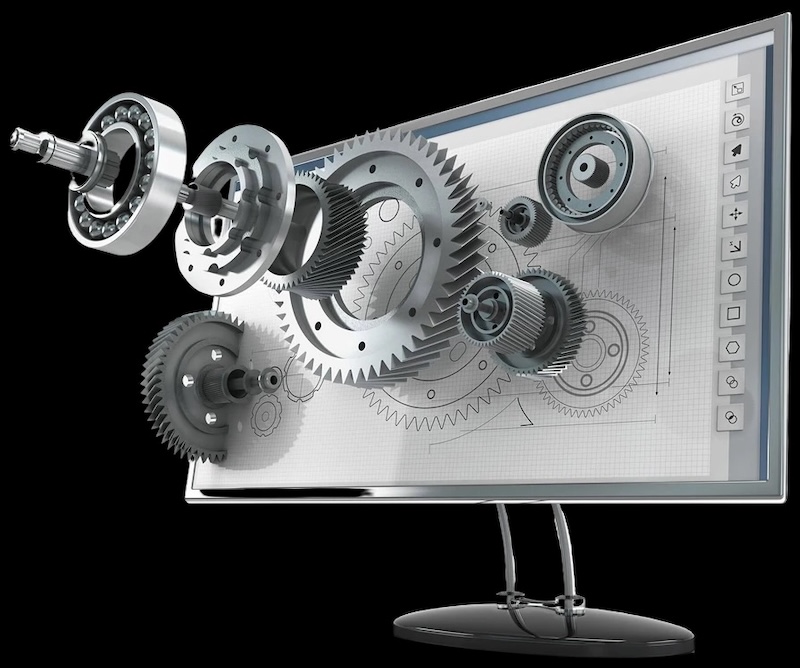
Robotics is often discussed in terms of software, artificial intelligence, and automation, yet every robotic system still depends on physical design. A robot can only move, grip, balance, lift, or survive real operating conditions if its mechanical foundation is sound.
That includes structure, joints, transmissions, materials, thermal behavior, durability, and manufacturability. In other words, robotics may look digital from the outside, but it still relies heavily on mechanical engineering underneath.
That reality becomes even more visible in modern development teams. A startup may bring in a mechanical engineer freelancer to solve a gripper problem or redesign a compact housing, while a larger company may rely on global team management services to coordinate robotics design work across several countries and disciplines.
The common thread is clear: mechanical engineering remains central to how robots are built, how they perform, and how they succeed outside the lab.
Why Mechanical Engineering is at the Core of Robotics
Mechanical engineering gives robotics its physical logic. It determines how a robot carries a load, transfers motion, absorbs shock, manages friction, and maintains precision over time. A control system can tell a robotic arm where to move, but the arm still needs links, bearings, joints, actuators, and structural stiffness to enable that motion reliably.
This matters because robotics is not only about movement. It is about controlled movement under real constraints. A warehouse robot must move efficiently while carrying a weight. A surgical robot must hold extremely tight tolerances. A field robot must survive vibration, dirt, and weather. The mechanical design has to match the operating environment, not just the design concept.
It also shapes what is possible later in software. If the structure is too flexible, the controls become harder. If the mechanism is too heavy, the battery life suffers. If the transmission creates too much backlash, precision drops. Mechanical design is not a support function in robotics. It is one of the main determinants of system performance.
The Main Mechanical Challenges in Robotics Design
One of the biggest challenges in robotics is balancing strength with weight. A robot needs sufficient structural integrity to handle forces, payloads, and repeated cycles, but excessive mass creates its own problems.
It can slow motion, increase power demand, raise actuator size, and reduce efficiency. This tradeoff appears in nearly every robot category, from industrial arms to mobile platforms and wearable systems.
Precision creates another challenge. Many robots operate in tasks where small errors become serious problems. Assembly robots, lab automation systems, and medical robots all need repeatable motion, low vibration, and minimal play in moving parts.
Achieving that level of accuracy requires careful attention to joint design, tolerances, stiffness, and the cumulative effect of small mechanical imperfections.
Durability is equally demanding. Robots often repeat the same motion thousands or millions of times. That means wear, heat buildup, fatigue, contamination, and alignment drift all need to be considered early. A robotic design that performs beautifully in a short demo may still fail in production if the mechanical system cannot survive long-term use.
Actuation, Transmission, and Motion Control Problems
Actuation is central to robotic motion and drives some of the most important mechanical decisions in the design process. Engineers must choose among electric motors, pneumatic systems, hydraulic systems, or other actuation methods based on force requirements, speed, response time, energy use, and operating environment. Each choice affects packaging, maintenance, and control complexity.
Transmission design adds another layer. Gears, belts, lead screws, harmonic drives, and linkages all influence how motion is delivered to the robot. A poor transmission choice can create backlash, noise, energy loss, or unnecessary maintenance.
A strong choice improves accuracy, torque delivery, and overall system responsiveness. In robotics, the quality of motion often depends as much on the mechanical transmission as on the motor itself.
Then there is the issue of compliance versus rigidity. Some robots need stiffness for precision. Others need controlled flexibility for safer interaction or better adaptability.
A gripper handling delicate objects cannot be designed like a heavy industrial joint. Mechanical engineers must decide where the system should resist movement and where it should yield. That decision affects both performance and safety.
Materials, Manufacturability, and Real-World Use
Material selection in robotics is rarely a simple matter of choosing the strongest option. Engineers need to consider weight, cost, corrosion resistance, machinability, fatigue behavior, thermal stability, and sometimes electrical or hygienic requirements.
Aluminum may work well in one robotic frame, while composites, stainless steel, engineering plastics, or specialized alloys may be better elsewhere.
Manufacturability matters just as much as raw performance. A robot design that looks elegant in CAD can become expensive or slow to build if the parts are too complex, too delicate, or too difficult to assemble consistently.
Mechanical engineering in robotics has to bridge the concept and production. That means designing parts that can actually be made, inspected, serviced, and replaced without unnecessary friction.
Real-world use often exposes what lab testing does not. Dust, moisture, impacts, temperature fluctuations, repeated cleaning, vibration, and user handling all affect mechanical reliability.
A robot built for controlled indoor conditions may need very different materials, seals, and structural choices than one meant for outdoor agriculture, disaster response, or factory-floor exposure.
The Benefits Mechanical Engineering Brings to Robotics
Good mechanical engineering improves robotic performance in ways that are immediately visible. It can increase payload capacity, improve positional accuracy, reduce power consumption, and make movement smoother and more predictable. A well-designed mechanism helps the robot do more useful work with fewer compromises.
It also improves safety and reliability. Better structural design reduces failure points. Better thermal planning helps prevent overheating. Better joint design reduces wear. Better packaging protects sensitive components.
These improvements may not look as dramatic as a software upgrade, but they often determine whether the robot can perform consistently in commercial or mission-critical settings.
Another major benefit is cost efficiency over time. Strong mechanical decisions reduce downtime, simplify maintenance, and shorten assembly effort. They can also reduce the size of motors, batteries, or support hardware needed elsewhere in the system. In robotics, a smart mechanical design often creates savings far beyond the parts list because it improves the whole system.
Where Mechanical Engineering Creates the Most Value in Robotics
Mechanical engineering becomes especially valuable in robots that interact closely with the physical world. Industrial robots need rigid arms, accurate joints, and dependable end effectors. Mobile robots need a durable chassis design, stable suspension, and efficient packaging.
Medical robots need compact mechanisms, smooth movement, and extremely controlled force application. In each case, the mechanical design directly affects the robot’s usefulness.
It also creates value in emerging robotics areas where products must be smaller, lighter, or safer. Collaborative robots need structures and joints that support safe human interaction. Service robots need efficient packaging and visually acceptable form factors.
Wearable robotics and exoskeletons need careful alignment with human motion, low weight, and comfort under repeated use. These are deeply mechanical problems, not only software problems.
Even in highly autonomous systems, the mechanical layer remains fundamental. Better sensing and smarter algorithms can improve decision-making, but the robot still has to move through space, handle force, and survive contact with its environment. The physical design determines how much of that intelligence can be turned into useful action.
The Future of Robotics Still Depends on Mechanical Depth
As robotics advances, mechanical engineering is becoming more important, not less. Higher expectations for precision, autonomy, mobility, and human interaction all place more demand on the physical system.
Robots are being asked to do more delicate work, operate in more complex settings, and perform for longer periods with less maintenance. That raises the standard for every mechanical decision inside the design.
The future will likely bring lighter structures, better actuation methods, more integrated mechanisms, and improved manufacturing approaches for robotic components. Still, the underlying challenge will remain familiar: how to create systems that move well, last long enough, and make economic sense. That challenge belongs directly to mechanical engineering.
For robotics companies, this means mechanical talent should be treated as strategic, not secondary. Software may attract the headlines, but the machine still has to exist in the real world. When the mechanical design is strong, the rest of the robotic system has a much better chance of succeeding.
