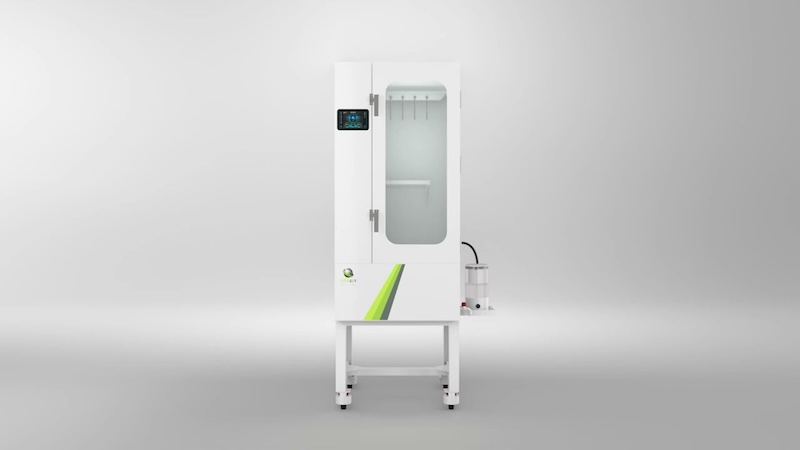
Picture a glass-fronted workstation that behaves a bit like an invisible shield. Air flows in carefully controlled patterns, almost choreographed, to keep hazardous particles from escaping while also protecting whatever sample sits inside.
That airflow matters. A lot.
Air is pulled inward through the cabinet’s front opening, forming a barrier that prevents stray microbes or hazardous aerosols from drifting out toward the operator or the surrounding room.
At the same time, filtered air flows downward over the work surface. Think of it as a gentle sterile “air curtain.” It sweeps contaminants away from samples so the materials you’re working with remain clean.
In short? The cabinet protects three things simultaneously: the person working, the experiment itself, and the wider laboratory environment. A neat trick for a metal box with a fan and filters.
Choosing the right cabinet is not trivial
Labs don’t just grab whichever unit is on sale that month. Selection depends on a few practical questions.
What kind of organisms are involved? How dangerous are they? Will chemicals or radioactive compounds be used alongside the biological work?
These questions tie into something called risk groups, which run from relatively harmless microbes to truly nasty pathogens.
Roughly speaking:
- Risk Group 1-3 organisms: standard biosafety cabinets usually do the job
- Risk Group 4 agents: that’s the serious territory. Think maximum containment systems
- Experiments involving volatile chemicals or radionuclides: special airflow designs are needed
Different cabinet classes exist precisely because no single design fits every situation.
The different classes of biosafety cabinets
Not all cabinets are created equal. Some are fairly basic. Others resemble miniature containment vaults.
Class I
This is the simplest design you’ll encounter. Air is pulled inward and then filtered before being exhausted. It protects the person operating the cabinet and the lab environment.
What it doesn’t do particularly well is protect the sample itself from contamination.
Still, for work involving lower risk microorganisms, it’s perfectly adequate.
Class II
Now we’re talking about the workhorse of modern laboratories. If you step into a university research facility or hospital microbiology lab, chances are high you’ll see one of these humming away.
Class II cabinets protect everything: the user, the room, and the sample.
Here’s how they manage that balancing act:
Roughly 70 percent of the air inside the cabinet recirculates as filtered downward airflow. The remaining portion is exhausted after passing through high-efficiency filters. That combination maintains sterile conditions inside while preventing hazardous particles from escaping.
Most labs rely on Type A2 cabinets, the most common configuration.
Occasionally, when toxic chemicals are involved, these cabinets are connected to exhaust ducts to keep fumes moving out of the workspace.
Class II Type B2
This variant takes things a step further. Instead of recirculating air inside the cabinet, all air is exhausted after filtration.
Nothing cycles back through the workspace.
Because of that design, Type B2 cabinets are often used when biological work is combined with toxic chemicals. No recirculation means less chance of hazardous buildup.
Some safety engineers even argue they’re the safest version of Class II cabinets, simply because the full-exhaust system acts like a built-in safety net.
Class III
This is the heavy-duty containment option. The “space suit” of bio safety cabinet.
Everything inside is completely sealed off. Operators manipulate materials through glove ports built into the cabinet wall. Air entering and leaving the system is heavily filtered, often more than once.
These cabinets are typically reserved for work involving the most dangerous pathogens known. The kind of organisms that make epidemiologists lose sleep.
A quick note on biosafety levels
Laboratories themselves are categorized by biosafety levels, which define how dangerous the materials being handled are.
There are four main levels.
- BSL-1 is the lowest tier. Harmless microbes used in teaching labs usually fall here. Basic precautions, handwashing sinks, and common sense are generally enough.
- BSL-2 involves pathogens that can cause disease but are manageable with standard safety practices. Think organisms like certain hepatitis viruses or Salmonella.
- BSL-3 laboratories deal with pathogens capable of causing serious illness, often transmitted through the air. Tuberculosis bacteria, for instance, belong here. Specialized ventilation and strict procedures become essential.
- Then there’s BSL-4. Rare facilities. Extreme containment. These labs handle agents such as hemorrhagic fever viruses where vaccines or treatments may not exist. Workers typically wear full-body positive-pressure suits, and Class III cabinets often form part of the containment system.
Filters: the unsung heroes
If the cabinet is the fortress, the filters are the gatekeepers.
There are two types dominate modern biosafety cabinets.
- HEPA filters, which capture 99.99 percent of particles around 0.3 microns in size.
- And ULPA filters, which are even finer, trapping about 99.999 percent of particles down to roughly 0.12 microns.
ULPA filters are often described as roughly ten times more efficient than standard HEPA filters. Not that HEPA is weak. It’s already incredibly effective.
But when dealing with biological hazards, “almost perfect” sometimes isn’t quite perfect enough.
Design details matter more than you’d think
You might assume all cabinets look roughly the same. Front window. Steel work surface. Maybe a control panel.
Yet small design choices can make a surprising difference.
For instance, airflow enters through a grille near the front of the cabinet. If a researcher accidentally blocks that grille with their arms or equipment, airflow can become disrupted. That, in turn, weakens the protective barrier.
Manufacturers try to reduce that risk with clever tweaks, like raised armrests or curved air grilles that discourage obstruction.
Controls and alarms
Older cabinets were almost laughably simple. Flip a switch. Fan starts. Light turns on.
Modern units are smarter.
Some now include digital microprocessor systems that monitor airflow velocity, sash position, filter performance, and other parameters. If something drifts out of safe operating range, alarms kick in.
Windows, trays, and ergonomics
Many cabinets use tempered safety glass that stays largely intact if shattered, reducing the chance of hazardous exposure. Some windows tilt forward slightly rather than standing perfectly vertical, which reduces glare and makes long work sessions easier on the eyes.
Inside the cabinet, the work surface can be a single solid tray or multiple removable panels.
Single trays contain spills better. Multi-piece trays are easier to lift out and clean.
Like so many things in lab design, it’s a trade-off.
And yes, ergonomics count
Researchers may spend hours inside a biosafety cabinet. Poor design can quickly turn that into an uncomfortable experience.
Good cabinets consider things like:
- Control panels placed where both seated and standing operators can reach them
- Bright but glare-free lighting inside the work area
- Quiet blowers, ideally under about 67 decibels
- UV lamps positioned so they don’t shine directly into someone’s eyes
Little details. They matter after the fourth hour of repetitive pipetting.
A few practical safety habits
Owning a biosafety cabinet doesn’t magically make work safe. Proper use still matters.
A few rules that experienced lab workers repeat endlessly:
- Don’t confuse biosafety cabinets with laminar flow hoods. They serve different purposes.
- Never ignore alarms. If the cabinet complains, something’s wrong.
- Avoid using open flames inside the cabinet.
- Don’t turn it into a storage shelf.
- Keep airflow unobstructed whenever possible.
Also important: certification. Cabinets should be tested regularly, usually once a year, to confirm that airflow patterns and filters are still performing properly.
Because when containment fails, the consequences can escalate quickly.
