The Technology is Impressive, But it’s Not Infallible
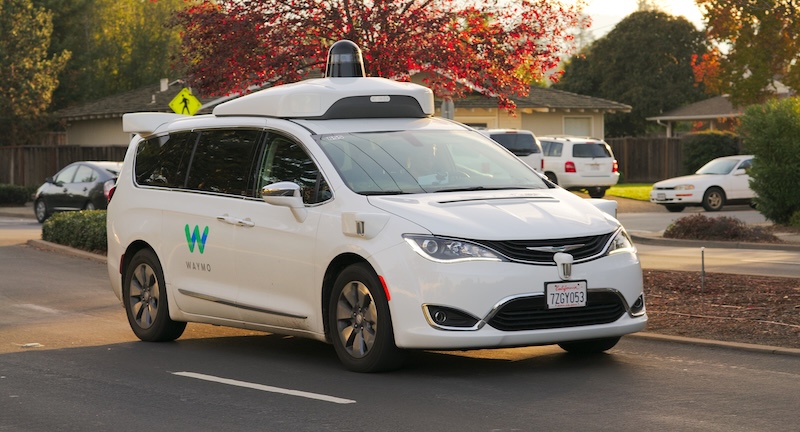
Waymo’s autonomous vehicles are, by most technical measures, a remarkable achievement. Each car is equipped with a suite of LiDAR sensors, radar, cameras, and a continuously updated AI model trained on billions of miles of real-world and simulated driving data.
Alphabet’s robotaxi division has positioned itself as the safest self-driving platform on the road, and statistically, there is data to support that claim.
But “safer on average” is not the same as “safe in every situation.” Since Waymo expanded its commercial operations in San Francisco, Phoenix, and Los Angeles, the National Highway Traffic Safety Administration (NHTSA) has logged multiple incident reports involving its vehicles.
Some were minor. Others resulted in injuries. And as the fleet grows, so does the probability that something, somewhere, will go wrong.
That raises a question that neither engineers nor regulators have fully resolved: when a Waymo vehicle causes an accident, who is actually responsible?
It is a question that anyone involved in one of these incidents, as a passenger, a pedestrian, or another driver, should understand before assuming the system will sort it out fairly. Consulting a waymo accident lawyer early in the process can make a significant difference in how a claim is pursued and resolved.
Autonomous Vehicles and a New Kind of Road Accident
Traditional traffic accident law is built around human error. One driver ran a red light. Another was distracted. Fault follows behavior, and behavior implies a person. Autonomous vehicles break that model almost entirely.
When a Waymo car makes a poor decision, misreading a cyclist’s trajectory, failing to yield, misjudging road conditions after unexpected weather, there is no driver to point to.
The “decision” was made by software, executed by hardware, and authorized by a company operating under a permit issued by a government agency. The causal chain is longer, more technical, and far harder to untangle than anything a standard insurance adjuster is trained to handle.
This is not a hypothetical problem. It is already playing out in real cases across California and Arizona, where Waymo has the most operational presence. And the legal frameworks that govern these cases are still, in many ways, being written in real time.
So, Who is Liable When a Robotaxi Crashes?
Liability in a Waymo accident can fall on multiple parties simultaneously, which is part of what makes these cases genuinely complex.
Waymo itself, as both the software developer and the vehicle operator, is the most obvious candidate. Unlike a traditional rideshare company that can distance itself from driver behavior, Waymo has no driver to deflect responsibility to.
When the car makes a decision, Waymo made that decision. This opens the door to product liability claims (the system was defective) and negligence claims (the system was not operated safely).
Hardware manufacturers may also bear partial responsibility if a sensor failed, a brake system underperformed, or a component did not meet its rated specifications. These are separate entities from Waymo, and their potential liability is evaluated independently.
Municipal or state regulators are rarely defendants, but the permits they grant, and the conditions attached to them, can become relevant in establishing what operational standards Waymo was expected to meet.
The practical implication is that a single accident can involve multiple defendants, multiple insurance policies, and multiple legal theories running in parallel. That complexity is not accidental. It is a structural feature of how autonomous vehicle deployment has been designed and regulated.
What to Do Immediately After a Waymo Incident
Whether you were a passenger inside the vehicle, a pedestrian struck by it, or a driver in another car that Waymo hit, the steps you take in the first hours after an incident matter enormously.
Document everything at the scene. Photograph the vehicles, the road conditions, traffic signals, skid marks, and any visible injuries. Do not assume Waymo’s onboard data systems will tell the full story, they will record what they record, and that data belongs to Waymo.
File a police report. This creates an independent contemporaneous record that is not controlled by any party with a financial interest in the outcome.
Seek medical attention promptly. Even if injuries seem minor, some symptoms, particularly those related to head trauma or soft tissue damage, develop over hours or days. A medical record establishing the timeline of your injuries is critical evidence.
Do not give recorded statements to any insurance company before consulting legal counsel. Waymo is backed by Alphabet, one of the best-resourced companies in the world. Their claims processes are not designed to maximize your recovery.
Request all available data. In California, involved parties have rights to certain information from autonomous vehicle incident reports filed with the DMV. An attorney can help you understand what you are entitled to and how to request it.
The Legal Landscape is Still Catching Up
California’s DMV requires Waymo to report all collisions, and those reports are partially public. But the standards for establishing liability in AV accidents are still being developed through litigation, regulatory guidance, and, slowly, legislation. There is no settled body of case law the way there is for conventional car accidents.
What this means practically is that the outcome of a Waymo accident claim depends heavily on the quality of the legal representation involved, the ability to engage technical experts who can interrogate the vehicle’s decision-making logs, and a thorough understanding of how product liability intersects with transportation law in the relevant jurisdiction.
A Technological Leap That Raises Human Questions
Autonomous vehicles represent one of the most consequential deployments of robotics and AI in everyday life. The promise is real: fewer accidents caused by distraction, fatigue, and impairment.
But the transition period, the years during which these systems operate at scale before the legal and regulatory architecture catches up, creates genuine risk for the people sharing roads with them.
The technology does not excuse the harm. And the sophistication of the system does not make the victim’s injuries any less real.
