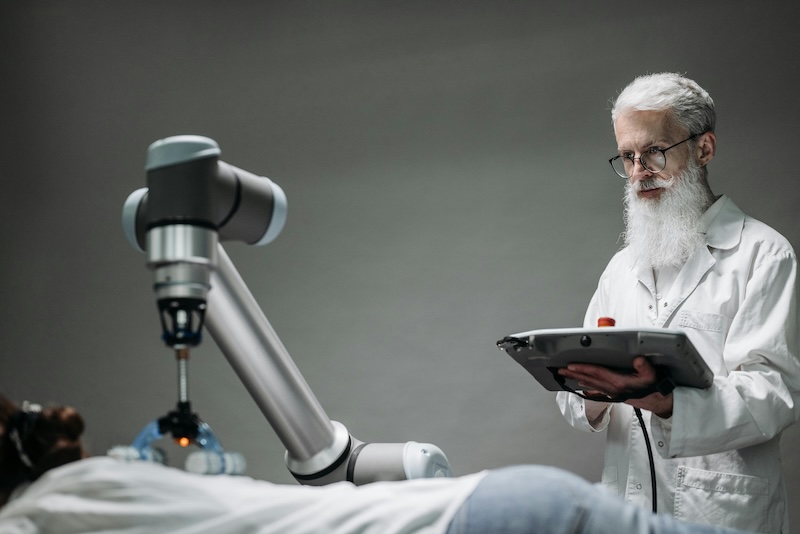
Medical robotics is not just a futuristic idea today. That’s why you now witness many robotic systems assisting surgeons, helping with rehab therapy, and automating hospital tasks, all over the world. As tech adoption continues to rise, regulatory pressure and liability risks also increase.
So, if you wish to deploy medical robotics, you need a clear strategy that protects patients, meets compliance standards, and strengthens operational safety from the get-go.
Start With Regulatory Ground Truth, Not Assumptions
Before you even start using tech-savvy equipment, like a robotic arm, it’s quite crucial that you figure out first how regulators will classify your device.
As of the moment, the US Food and Drug Administration is treating medical robots as medical devices that fall under different risk categories. Depending on their risk level and purpose, many surgical robots require either premarket approval or 510(k) clearance.
Many requirements vary worldwide. Within the European Union, devices have to adhere to the European Medicines Agency framework and Medical Device Regulation (MDR) standards.
If you are in the Asia Pacific region, the local regulatory bodies frequently follow the International Medical Device Regulators Forum (IMDRF) guidance.
That’s why it’s still best to make a regulatory map part of your early design phase rather than after prototype testing.
Design for Patient Safety and Clinical Evidence
You can’t just depend on engineering confidence. Clinical data is necessary.
The World Health Organization keeps on highlighting that digital health and robotic systems must prove their safety. At the same time, they actually indicate that it’s about effectiveness, and equity being the priorities before scale. Rigorous clinical trials, post-market surveillance, and monitoring real-world performance are pretty crucial.
If you consider global trends, the medical robotics market continues to project strong growth through the coming years, driven by surgical and precision robotics and rehabilitation systems. With that growth comes scrutiny. Hospitals now demand evidence of reduced complication rates, shorter recovery times, and measurable cost savings.
Your Clinical Validation Roadmap
- Define endpoints
- Collect structured data
- Prepare for audits
Clear documentation protects both patients and your organization.
Build Legal Strategy With a Healthcare and Life Sciences Defender
As soon as your robot interacts with a patient or collects data, you enter a complex legal field. This is where partnering with a healthcare and life sciences attorney becomes critical.
Working with a legal counsel well-versed in healthcare and life sciences (with the right credentials) can help you with FDA submissions, clinical trials, data privacy compliance, and product liability exposure.
Suppose the system in question utilizes AI to assist in the surgical movement. In that case, it is necessary to look into the algorithm’s transparency, software updates, and cybersecurity measures before the release.
Cybersecurity risk isn’t theoretical. Healthcare remains a top target for cyberattacks worldwide, according to global threat reports from leading cybersecurity firms.
It usually comes to the spotlight when your robotic system connects to hospital networks. You’ll then carry data protection duties under laws like the HIPAA provisions in the US and GDPR in the European Union.
Legal counsel also helps structure contracts with hospitals, manage indemnity clauses, and design incident response protocols. This reduces long-term operational risk and strengthens investor confidence.
Secure the Tech Stack and Protect Patient Data
Medical robots are connected systems. That means they’re vulnerable.
You also need to implement secure coding practices, regular penetration testing, and encrypted data transfer. Follow guidance from national cybersecurity agencies and industry standards bodies. Document every security control.
If a breach occurs, regulators will ask what you did to prevent it. Clear logs and policies show due diligence.
Train Teams and Monitor in Real Time
Deployment is just the beginning stage of a device’s life cycle. It is only after conception, planning, and execution that a device is ready for use. However, end users of each hospital equipment, like surgeons, nurses, and biomedical engineers, need to be taken through a structured training program.
Competency benchmarks and refresher programs are essential components of the development of training programs for hospital staff. Moreover, systems for real-time monitoring help to automatically identify any abnormal behavior of a device even before the patients or staff may have been exposed to harm.
It has to be understood that continuous improvement is not a matter of option but an integral part of the compliance culture.
If you bring medical robotics to the forefront with regulatory clarity, clinical proof, legal backup, cybersecurity strength, as well as ongoing training, you are giving patients and your brand double protection. Innovation, in this case, becomes a matter of sustainability and not risk.
Main image by Pavel Danilyuk, via Pexels
