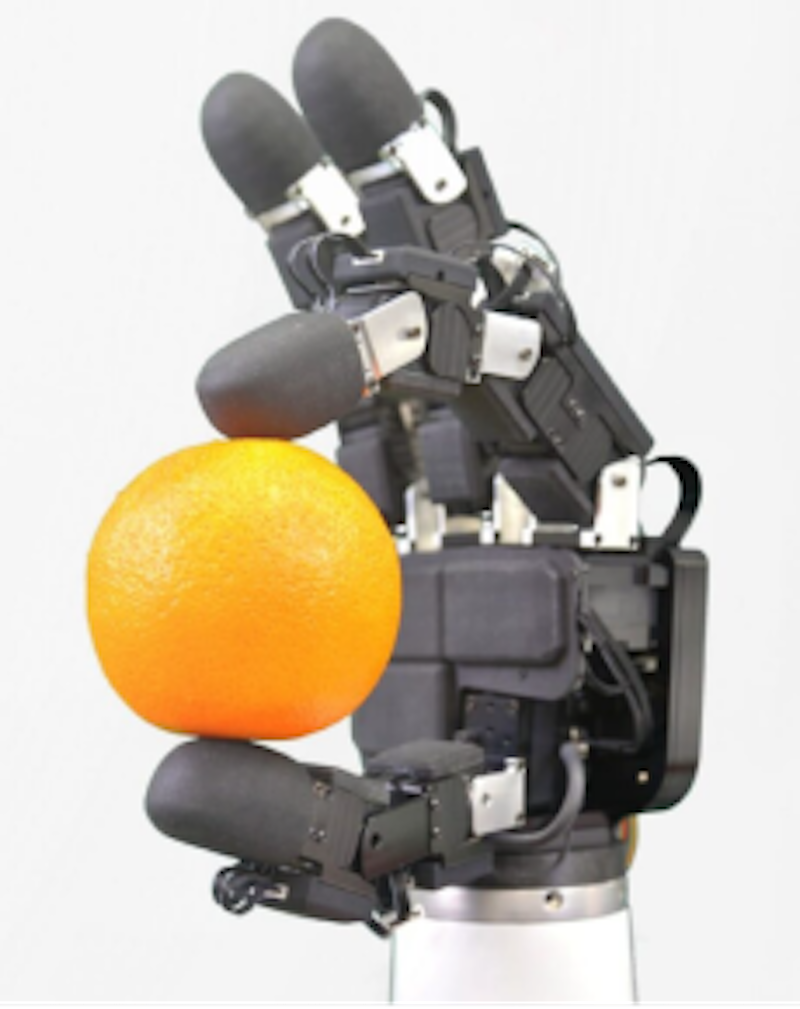
XELA Robotics presented its uSkin 3D tactile sensing technology at CES 2026, showing how advanced touch sensing can improve manipulation and automation in humanoid and industrial robots.
The Tokyo-based company, which focuses on tactile sensor hardware and software, demonstrated uSkin integrated into robotic hands and grippers, highlighting how robots can detect contact forces, object shape, and movement within a grasp.
The system is designed to provide robots with a more detailed sense of touch than is typically available using force or vision sensors alone.
According to the company, the technology is already being used in academic research and commercial pilot projects. The CES demonstrations focused on applications where robots must handle objects delicately and consistently, such as manufacturing, logistics, warehousing, and agriculture.
XELA Robotics said its tactile sensors are built from a flexible elastomer and can be integrated across larger surface areas of a robot hand, including fingertips, phalanges, and the palm.
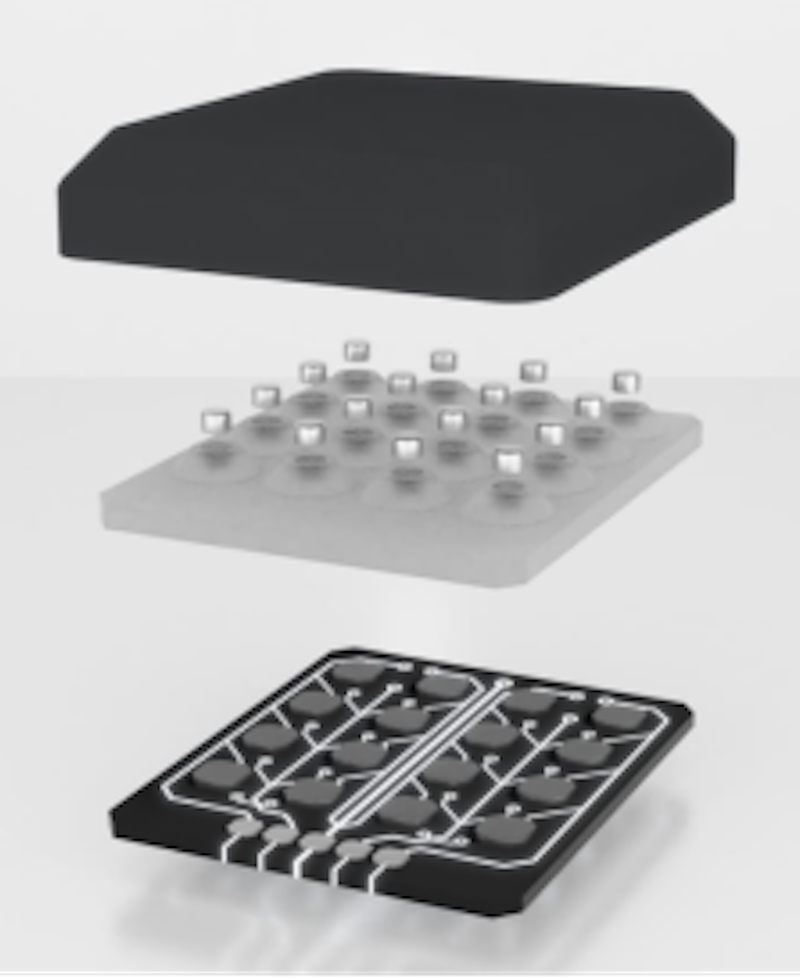
This differs from many existing robotic hands, which rely primarily on fingertip sensing. The company said broader sensor coverage enables more stable gripping and manipulation, particularly for irregular or fragile objects.
In December 2025, XELA Robotics announced that it had integrated uSkin sensors into a five-fingered anthropomorphic robot hand produced by Tesollo. Commercial orders for that configuration are expected to begin in late first quarter 2026, according to the company.
Alexander Schmitz, chief executive of XELA Robotics, said: “We have taken an agnostic approach towards the commercialization of our technology. Our focus has been to develop the most human-like sense of touch and make it available to all companies seeking to enhance their real-world automation.”
The company said its sensors are designed to integrate with parallel grippers, adaptive grippers, custom end-effectors, and existing robotic hands, reducing the engineering effort typically required to add tactile sensing to deployed systems.
XELA Robotics positioned tactile sensing as a key enabling technology for more capable humanoid and industrial robots, particularly as automation systems move toward handling a wider variety of objects in less structured environments.
