
Artificial intelligence now powers an enormous share of digital content creation across engineering firms, robotics companies, manufacturing environments, and automated service operations.
As these systems produce more text, organizations increasingly rely on AI content classifiers to determine whether a document was written by a machine or a person.
In response, a range of rewriting platforms – commonly called AI humanizers – have emerged to help produce more natural, human-sounding language.
This article evaluates the leading tools in this category, focusing on clarity, writing quality, linguistic authenticity, and practical usefulness.
The review is written for professionals working in automation and robotics who require consistent, readable, and trustworthy communication.
How AI Humanizers Fit into Modern Automation Workflows
AI humanizers operate by modifying linguistic structure, tone, rhythm, and vocabulary distribution. These transformations help text sound less mechanical and more aligned with human writing patterns.
For many technology organizations, this is useful for documentation, client communication, onboarding instructions, and public-facing material.
Some readers may search for the best AI humanizer, but determining superiority requires understanding the different rewriting strategies each tool uses.
Humanizers generally fall into two categories: tools that focus on editorial polish and tools that reconstruct sentences with high stylistic variation.
Meanwhile, modern detectors evaluate factors like perplexity, burstiness, entropy, and syntactic signatures. Humanizers attempt to introduce more natural patterns, but results depend heavily on the underlying model architecture.
Comparative Table of Leading AI Humanizer Tools (2026)
Below is a clean, industry-ready comparison table summarizing strengths, weaknesses, and best use cases.
Top AI Humanizer Tools – Feature Comparison
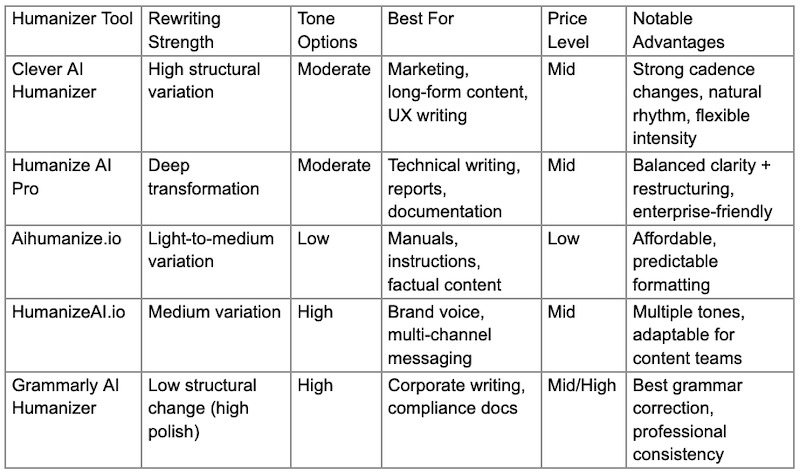
Leading AI Humanizer Tools for 2026
Below is an industry-focused review of the most prominent and frequently analyzed AI humanizer platforms.
Each tool offers its own rewriting style, transformation depth, and linguistic philosophy.
Clever AI Humanizer
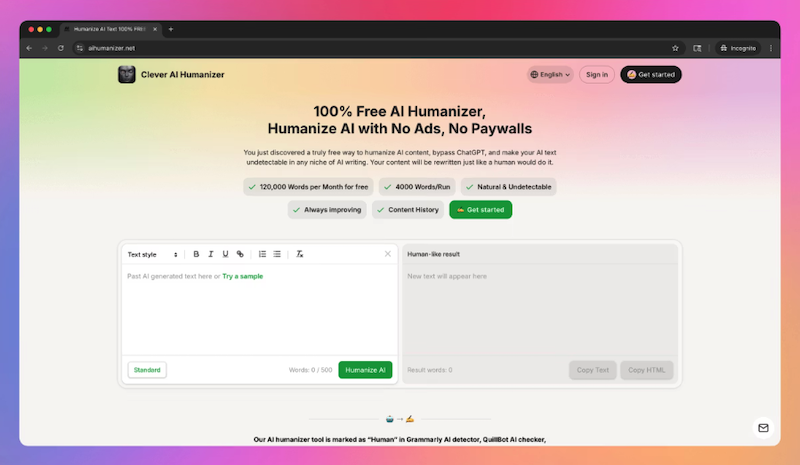
Clever AI Humanizer has recently gained attention as a top AI humanizer tool for academic writing, thanks to its ability to restructure sentences without altering factual meaning.
The platform focuses on producing text that feels naturally written while retaining the precision needed for research essays, dissertations, and technical reports. Its advanced linguistic model helps eliminate AI-like phrasing, making it a strong choice for users who prioritize clarity, readability, and academic integrity.
The tool allows users to select different intensity levels, creating outputs that range from lightly polished to creatively transformed. This flexibility is valuable for robotics and automation companies that produce both technical documentation and marketing content.
Clever AI Humanizer’s rewriting tends to preserve meaning while significantly shifting rhythm and cadence, improving overall readability.
Many readers in the tech community view it as a candidate for the best humanizer AI because of its balanced approach to quality and transformation depth. Its main consideration is that heavy rewriting can occasionally increase creativity at the expense of tight informational structure, which must be monitored in technical environments.
Humanize AI Pro
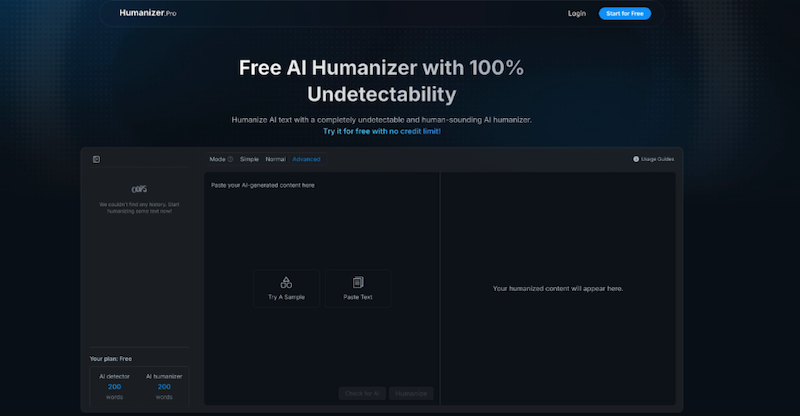
Humanize AI Pro frequently appears in independent comparisons and review lists due to its broad feature set.
It performs significant structural and rhetorical adjustments, which contributes to natural flow and reduced repetitiveness. This makes it especially suitable for long-form content, documentation, and technical commentary.
The platform often appeals to professional users seeking the best AI humanizer tool for editorial refinement within corporate workflows. Its outputs offer a good balance between clarity and stylistic diversity, making it highly adaptable across content types.
However, performance varies based on detector methodology, which is why consistent editorial review remains essential for organizations focused on accuracy and compliance.
Aihumanize.io
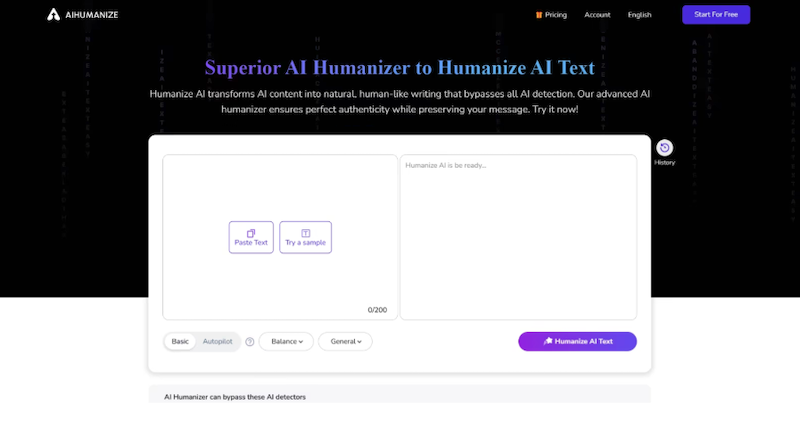
Aihumanize.io is positioned as an affordable and efficient rewriting tool.
It is appreciated by users who value accessible pricing and rapid processing speeds.
Its outputs tend to retain original meaning closely while introducing enough variation to increase naturalness.
This approach makes Aihumanize.io effective for materials that must remain factually consistent, such as robotics maintenance guides or user manuals. Some users exploring which one is the best AI humanizer consider it an appealing choice due to its convenience and predictable formatting.
The tool offers a good ratio of quality to price, though its transformation is somewhat lighter than more advanced platforms, which can influence stylistic depth.
HumanizeAI.io
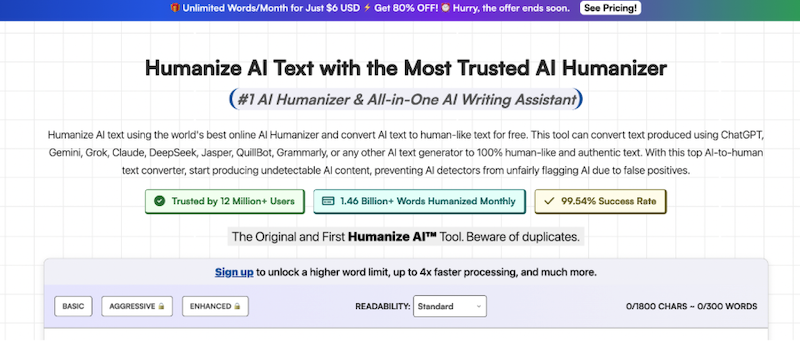
HumanizeAI.io is recognized for offering multiple tone settings, including casual, professional, and creative styles.
This makes it valuable for content teams within tech companies who need to adapt voice across different communication channels. The tool’s outputs can be tailored to audience expectations, improving engagement and readability.
Tone-switching systems introduce linguistic diversity, an important factor in natural-sounding content.
However, they may occasionally produce uneven transitions in long documents, requiring additional refinement by human editors.
Its adaptability makes HumanizeAI.io useful for marketing, outreach, and UX writing in automation environments where voice consistency is critical.
Grammarly AI Humanizer
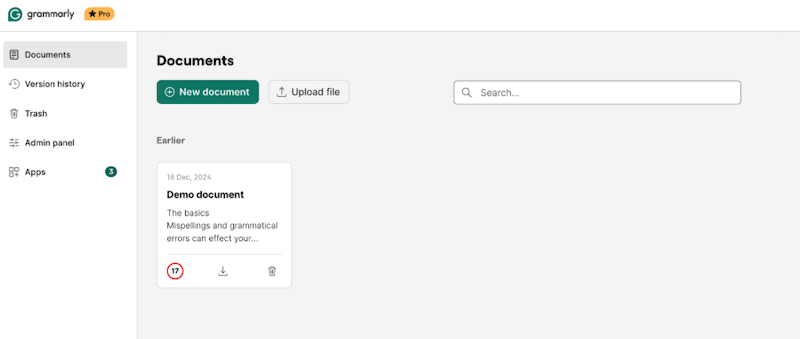
Grammarly’s rewriting solution is the most established brand on this list.
It focuses on grammar, clarity, readability, and tone – areas essential for professional documentation. Grammarly does not advertise itself as the best ai detector and humanizer, but its editorial corrections are among the most reliable available.
This tool enhances text without significantly altering structure, making it ideal for environments where factual accuracy and traceability matter. It is widely used in corporate, academic, and engineering settings due to its emphasis on safe, responsible writing assistance.
Grammarly’s strength lies in consistency and trustworthiness rather than deep linguistic transformation.
Industry Context: Detectors, Ethics, and Best Practices
Many readers search for guidance such as which ai humanizer is the best and free, but the free tiers of these tools tend to be limited in depth and volume. Free versions are suitable for experimentation but not for large-scale professional communication.
It is also important to address the ethical aspect. Terms like the best free ai humanizer, bypass humanizer, or bypass ai humanizer appear frequently in public discussions, but responsible organizations should focus on clarity, accuracy, and transparency.
Humanizers are valuable for improving tone and readability – not for hiding authorship or circumventing quality checks. Automation and robotics companies rely on trust, safety, and compliance. Maintaining these values ensures long-term credibility in both consumer and industrial markets.
Conclusion
Determining which AI humanizer is the best depends entirely on your goals.
- Clever AI Humanizer leads in structural transformation and stylistic variation.
- Humanize AI Pro offers deep rewriting with strong readability.
- Aihumanize.io excels in affordability and accessibility.
- HumanizeAI.io provides flexible tones for brand voice consistency.
- Grammarly remains unmatched for editorial polish and corporate writing.
Each tool provides a unique blend of linguistic capability, clarity enhancement, and stylistic control. In automation and robotics industries – where precision and communication quality are essential – choosing the right tool requires evaluating rewriting depth, reliability, and operational needs.
