Nvidia and Synopsys have agreed a “major expansion” of their long-running technical collaboration, outlining a multiyear partnership that aims to reshape engineering workflows across semiconductor, aerospace, automotive and industrial sectors.
The agreement combines Nvidia’s accelerated computing stack with Synopsys’ engineering and simulation software to address the mounting complexity facing R&D teams.
As part of the deal, Nvidia has invested $2 billion in Synopsys common stock at a purchase price of $414.79 per share. And because Synopsys acquired Ansys for approximately $35 billion earlier this year, Nvidia will probably be a part owner of the engineering design application.
The companies say the partnership brings together accelerated GPU computing, agentic AI, and industrial-scale digital twins built on platforms such as Nvidia Omniverse and Synopsys’ physics-based simulation engines. According to the announcement, the goal is to enable “simulation at unprecedented speed and scale, from atoms to transistors, from chips to complete systems”.
Jensen Huang, founder and CEO of Nvidia, says: “CUDA GPU-accelerated computing is revolutionizing design – enabling simulation at unprecedented speed and scale, from atoms to transistors, from chips to complete systems, creating fully functional digital twins inside the computer.
“Our partnership with Synopsys harnesses the power of Nvidia accelerated computing and AI to reimagine engineering and design – empowering engineers to invent the extraordinary products that will shape our future.”
Sassine Ghazi, president and CEO of Synopsys, said: “The complexity and cost of developing next-generation intelligent systems demands engineering solutions with a deeper integration of electronics and physics, accelerated by AI capabilities and compute. No two companies are better positioned to deliver AI-powered, holistic system design solutions than Synopsys and Nvidia.”
Technical scope of the partnership
The collaboration spans several major engineering domains, as listed below.
- GPU-accelerated engineering applications: Synopsys will integrate Nvidia CUDA-X libraries and AI-physics models into compute-heavy workloads including physical verification, electromagnetic analysis, molecular simulation, chip design, optical modelling and multiphysics simulation.
- Agentic AI for autonomous engineering workflows: The companies will combine Synopsys AgentEngineer with Nvidia’s agentic AI stack – including Nvidia NIM microservices, Nvidia NeMo Agent Toolkit, and Nvidia Nemotron models – to enable AI-driven design exploration, verification automation and simulation workflow orchestration.
- High-fidelity digital twins: The partnership will extend use of Nvidia Omniverse, Nvidia Cosmos, and Synopsys simulation engines to create accurate cross-domain digital twins for semiconductor fabrication, robotics, automotive systems, aerospace structures and industrial equipment.
- Cloud-ready engineering pipelines: Both partners plan to deliver GPU-accelerated engineering platforms through cloud environments, making high-performance simulation accessible to smaller engineering teams without local HPC infrastructure.
Broader industry rollout
The agreement includes coordinated go-to-market activity using Synopsys’ global sales channels, enabling faster adoption of GPU-accelerated engineering tools.
The companies emphasise that the partnership is not exclusive and will continue alongside work with the wider semiconductor and EDA ecosystem.
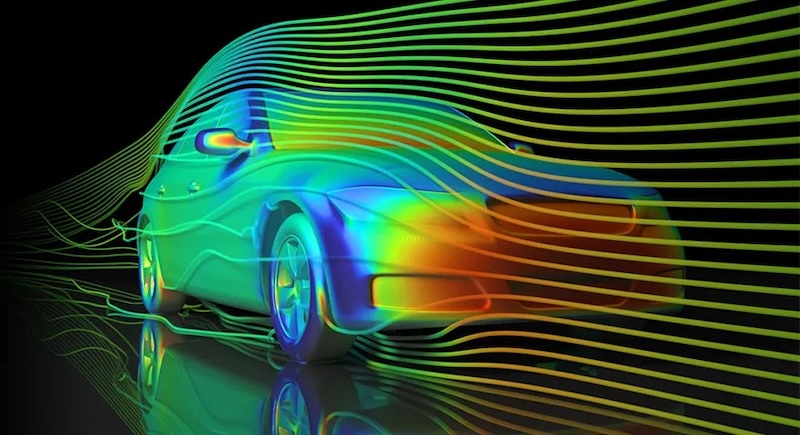
Main image courtesy of ParametricDesign.com
