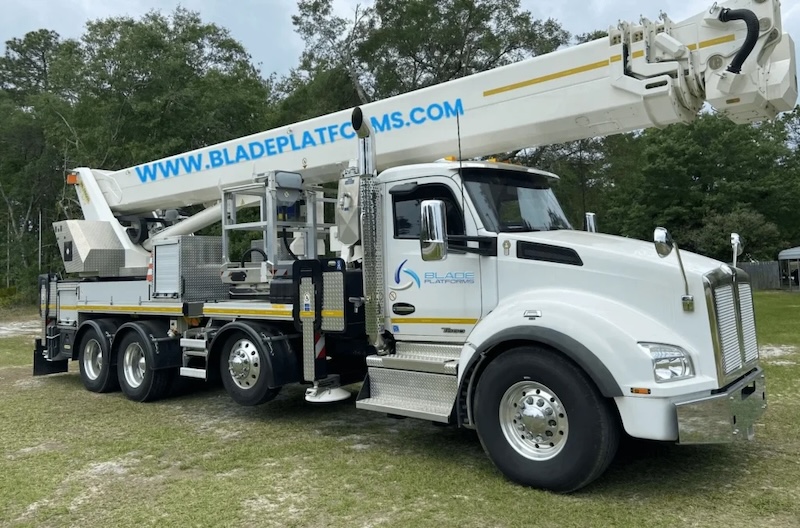
Aerial equipment rental has a habit of arriving as a surprise. A camera above the palletizer drifts out of alignment, a chiller on the roof needs swapping, an integrator cannot commission a sensor run from a ladder, and somebody phones around for a machine. A day rate comes back, it looks reasonable, and the job gets approved on that figure alone.
Then the invoice lands and it is bigger, for reasons nobody hid.
The rate answered one question: what does the machine cost for the period. The budget needed a different answer: what does the job cost, start to finish, including the hours the plant stood still underneath it.
Height Work Belongs in the Annual Budget
Automated sites are vertical. Conveyor crossovers, vision systems mounted on steelwork, wiring and detection gear running above high bay racking, air handling and chillers on the roof keeping a controlled space controlled.
Nearly all of it was installed from access equipment, and nearly all of it will be maintained the same way, because climbing the structure is slower, more dangerous and harder to justify on paper.
So this is not an unforeseeable expense. A site with that much equipment above head height will hire platforms more than once a year, and pretending otherwise is how a predictable cost ends up on the wrong side of a variance report.
What the Rate Buys
The hire rate covers the machine, for the agreed period, in working order. Current inspection certification. Manuals and load chart on board. Routine servicing while it is with you.
Fair enough, and genuinely most of what a buyer cares about.
It is the border around that package which causes trouble. Delivery and collection, an operator if one comes with it, fuel, waiting time if the site is not ready, moving between work points, and the question of who pays for a day when the machine physically cannot be used.
Those sit outside the rate on most agreements and inside it on a few, which is precisely why two quotes for the same machine can differ by a wide margin with nobody being dishonest.
Transport is the Line That Moves Most
Mileage is a poor guide to what delivery will cost. Route is the real driver.
The taller classes ride on multi axle chassis heavy enough to need permits, route surveys and timed delivery windows. Forty miles through a town with a weight-restricted bridge and a morning embargo can beat eighty miles of open highway on cost, and the charge applies in each direction.
What makes it awkward is that the figure barely changes with the length of the hire. Over three weeks it disappears into the total. Over a two-day inspection, it can rival everything else on the quote, which is a good argument for grouping several small height jobs into one visit rather than calling the same machine back twice in a month.
Operators and the Gap Between a Hire Day and a Work Day
Big machines arrive with a trained operator as standard, and that labor is the second largest number in most of these jobs.
Shift length drives it, along with travel time, overtime rules, and whether a second person is needed at ground level for the exclusion zone and the rescue plan. All reasonable. The expensive part is structural: a hire day and a productive day are rarely the same thing.
Picture a facility that only allows work above the line between the end of second shift and the start of first. Four usable hours. The machine and the operator are still being paid for the day around them.
Nobody puts that on a quote. Teams who handle aerial equipment rental for industrial clients will price an operated hire around the window a plant can actually offer, so saying what that window is at the enquiry stage changes the number before it is ever invoiced.
The Stoppage Underneath Costs More Than the Machine
Here is the part that separates an automated facility from a construction site.
Work at height over a line stops the line. The ground beneath the basket has to be closed while tools are overhead, and that area is often the busiest floor in the building.
Most operations can already tell you what an hour of stoppage costs. That number belongs in the access budget, not in a separate column nobody adds up.
It also reorders the choices. A platform that reaches the work from outside the production footprint might cost more to hire. If it halves the stoppage, it was cheaper. Same with a machine that can be set during a planned shutdown instead of a running shift.
Weather deserves a line too. Work stops when wind at basket height passes the machine’s rated limit, and the gust up there is stronger than the breeze on the ground. Those hours stay chargeable unless the agreement says something different, so the standby and weather terms are worth reading before anyone signs.
Where a Week of Spending Lands
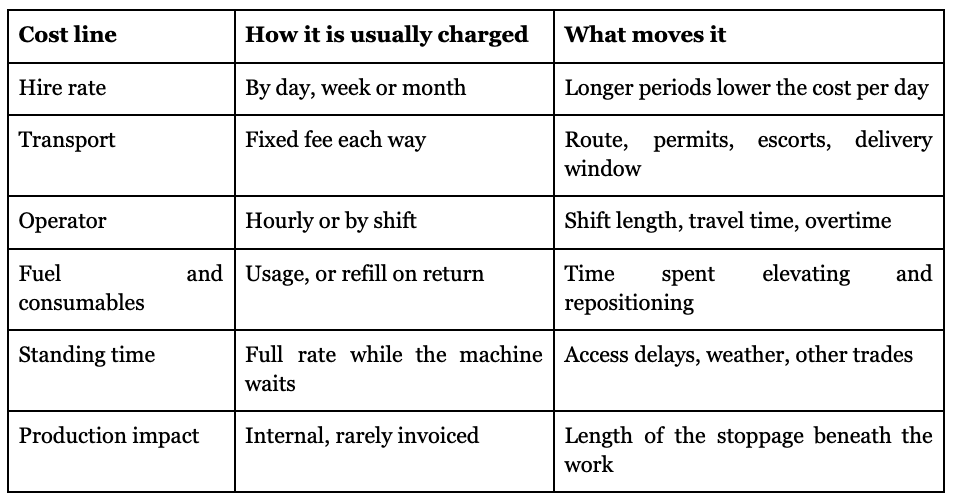
The last row is invisible to every supplier and painful to every plant manager.
What Actually Lowers the Total
Measure before you call. Work height, the distance from the nearest spot a truck can legally stand to the thing being fixed, the basket load with tools and parts in it, and how many separate positions the work needs. Those four figures decide which machines can do the job, and sending them converts a vague quote into a real one.
Match the period to the work. Two short hires a fortnight apart can beat one long one, even paying transport twice.
Book around production rather than against it. An access window agreed with operations before the machine is ordered saves more money than any conversation about rates.
End the hire the day it stops earning. Most agreements run until an off hire is confirmed and collection booked, so a finished machine parked in a yard is still costing money until somebody makes that call and keeps the reference.
Frequently Asked Questions
Which line is usually the biggest?
On a short job, transport in both directions. On a longer one, the rate plus operator hours. Over a running line, the stoppage underneath tends to beat both.
Does a taller machine always cost more overall?
No. Extra reach can let the machine stand outside the production area, and a shorter stoppage often pays for the higher rate and the permitted delivery.
How much notice does a tall platform need?
Common sizes can appear within days. The tall classes are held centrally, travel under permit and exist in smaller numbers, so plan those in weeks.
The Practical Takeaway
Height access stops being unpredictable as soon as it is costed as a job instead of a rate. Put the machine, the transport both ways, the operator hours, the fuel, the standing time and the production impact in one figure, and the cheapest headline quote quite often turns out to be the most expensive outcome.
The sites that spend least are the ones that measure first, agree the window with operations, and compare delivered totals rather than day rates.
Suppliers handling aerial equipment rental for automated and industrial facilities, such as https://www.bladeplatforms.com/, will quote against drawings, ground conditions and a working calendar rather than a rate card, so send those details with the enquiry and ask for the full cost of the week before anything is booked.
