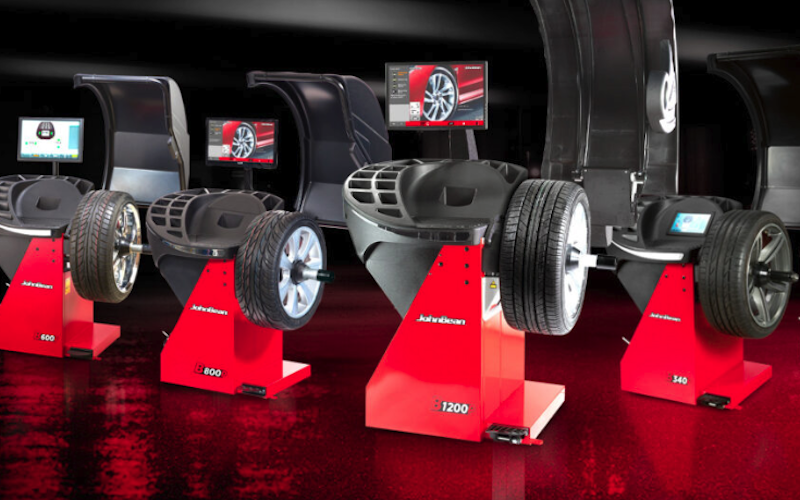
Maintaining tire health and ensuring smooth vehicle operation requires specialized shop equipment designed for modern automotive standards.
Among these essential tools, high-precision balancing machinery plays a direct role in eliminating cabin vibration, extending tread longevity, and protecting suspension components. Selecting the right machinery involves analyzing shop workload, rim diameter diversity, and required cycle speed.
Investing in new garage equipment requires careful evaluation of technical capabilities, diagnostic options, and physical space requirements.
Understanding which features drive daily efficiency enables shop managers to choose equipment that delivers consistent accuracy and long-term serviceability.
Modern Drive Systems and Measurement Technologies
The core functionality of any balancing machine centers on its ability to detect minute mass imbalances across dynamic axes. High-end units utilize motorized drive shafts paired with digital optical sensors to measure weight distribution down to fraction-of-an-ounce accuracy.
Faster cycle times allow service technicians to diagnose and correct imbalanced assemblies without creating bottlenecks in busy bays.
Contactless measurement technology has significantly reduced setup times for busy service centers. Ultrasonic sensors automatically record rim width, diameter, and offset distance, eliminating manual data entry mistakes.
When automated measurement systems scan assemblies instantly, technicians eliminate entry errors and speed up overall workflow.
Laser-guided placement systems represent another major advancement in weight application. Instead of relying on manual positioning estimates, laser pointers project precise lines indicating where clip-on or adhesive weights should sit.
This technology ensures weight placement matches calculated positions exactly, preventing repeat balancing runs on sensitive high-performance wheels.
Typical Wheel Balancing Workflow
- Mounting Assembly: Secure the wheel onto the spindle using proper precision cones or flange plates.
- Automated Laser Scanning: Perform rim profiling to automatically measure wheel dimensions, spoke locations, and runout offset.
- Spin Diagnostic Cycle: Lower the safety hood to spin the assembly and measure dynamic and static imbalance forces.
- Readout Analysis and Laser Placement: Review required mass on the digital display and apply counterweights precisely at the laser-guided position.
- Verify Zero Balance: Perform a secondary test spin to confirm that the wheel balance registers as zero.
Ergonomic Clamping Mechanisms and Shaft Specifications
Workpiece mounting stability directly impacts measurement accuracy. Traditional manual wing-nut clamping systems require physical effort and can occasionally seat wheels unevenly if threads wear down or debris builds up.
Fast, uniform mounting systems minimize setup variation:
- Pneumatic Clamping Systems: Power-assisted clamping mechanisms pull assemblies firmly against the faceplate with consistent force, reducing operator fatigue and improving repeatability.
- Heavy-Duty Main Shafts: Robust shaft construction supports larger light-truck and commercial tire assemblies without shaft deflection or long-term calibration loss.
- Precision Cone Sets: Specialized mounting adapters and low-taper cones accommodate hub-centric and lug-centric wheels accurately, avoiding false vibration readings.
- Quick-Nut Speed Clamps: High-speed mechanical nuts feature release levers that slide smoothly along shaft threads, speeding up manual mounting routines.
Proper mounting hardware guarantees that the wheel spins on its true geometric center. When mounting errors occur at the shaft, even advanced diagnostic sensors generate inaccurate weight placement recommendations.
Advanced Software Features and Diagnostic Capabilities
Modern balancing units incorporate intuitive digital interfaces that guide technicians through complex diagnostic routines.
Clear touchscreens display real-time weight requirements, assembly runout measurements, and step-by-step corrective procedures.
Automatic weight-minimization software reduces shop supply costs by calculating weight placement strategies that use smaller counterweights.
Spoke-concealment programs split adhesive weight requirements, hiding them neatly behind wheel spokes on high-end alloy rims where aesthetics matter to vehicle owners.
Modern balancing equipment combines precise measurement with software features that help technicians identify imbalance, determine corrective weight placement, and work efficiently across different wheel designs.
A professional wheel balancing machine may incorporate laser-guided weight positioning, automatic wheel-data entry, spoke detection, split-weight functions, and diagnostic capabilities for identifying runout or other conditions that can contribute to vibration.
These features help technicians make more consistent corrections while reducing unnecessary setup time during the balancing process.
Ergonomics, Space Efficiency, and Safety Guarding
Physical layout and operator safety deserve equal consideration when evaluating new equipment. Modern shop floors require equipment that combines compact footprints with full protective guarding to satisfy workplace safety standards.
Safety hoods with automatic spin start initiate the diagnostic cycle as soon as the guard drops over the spinning assembly. Hood-integrated sensors prevent operation if protective covers remain open, shielding technicians from loose debris or balance weights.
Integrated wheel lifts represent another vital ergonomic feature, raising heavy truck assemblies to shaft height without manual lifting effort, reducing workplace strain injuries.
Space-saving cabinet designs incorporate rear-mounted storage pegs for cones, calipers, and clamping accessories. Tiered weight trays keep adhesive strips and clip-on weights organized within easy reach, speeding up technician movement during busy service hours.
Key Operational Guidelines for Equipment Evaluation
Selecting the right machine requires matching shop capabilities with expected vehicle volume. Reviewing specific operational demands helps managers choose machinery suited for daily service workloads.
- Evaluate Maximum Wheel Capacity: Ensure shaft diameter, weight limits, and hood clearance accommodate heavy light-truck and oversized aftermarket assemblies routinely serviced.
- Verify Calibration Requirements: Look for machines offering user-guided self-calibration routines that allow quick recalibration without waiting for service technicians.
- Assess Cycle Speed Metrics: Compare spin-to-stop times across models to select equipment capable of handling high daily bay traffic without delays.
- Review Display Interfaces: Choose intuitive touchscreen monitors or high-contrast displays that simplify operation for technicians of varying skill levels.
- Examine Power Requirements: Confirm shop floor electrical infrastructure matches machine voltage needs, whether standard single-phase power or three-phase supply.
Systematically reviewing these criteria prevents purchasing underpowered machinery that creates shop bottlenecks during peak seasonal tire changes.
Key Takeaways
Investing in quality balancing machinery enhances shop efficiency, improves diagnostic precision, and ensures long-term customer satisfaction.
Advanced features such as contactless rim scanning, laser weight positioning, and pneumatic clamping reduce labor times while eliminating measurement errors.
Matching machine specifications with shop volume, wheel sizes, and ergonomic requirements creates a productive service bay.
Equipping service centers with reliable diagnostic tools ensures smooth vehicle operation, extended tire life, and professional service quality across every customer visit.
