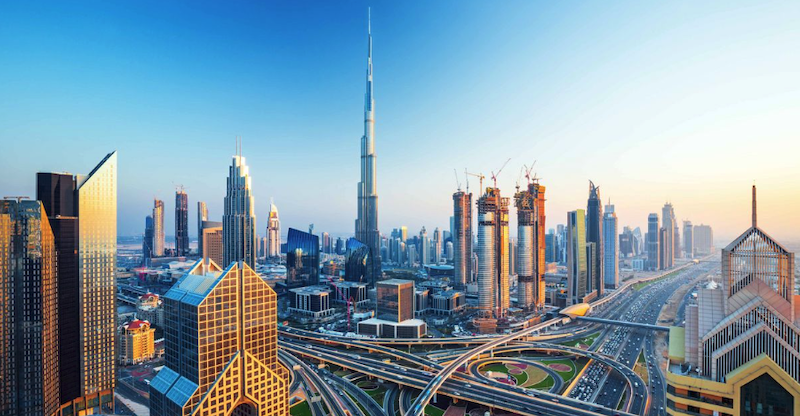
Dubai has long established itself as a city of superlatives, known for its rapid urban development and architectural marvels. However, a significant shift is currently under way beneath the skyline: the transition from being a primary importer of technology to a global developer of it.
This evolution is perhaps most visible in the fields of robotics and automation, where the United Arab Emirates (UAE) is no longer just an observer of global trends but a central architect of its own high-tech future.
A National Blueprint for Innovation
The momentum behind this transformation is anchored in high-level government strategy. In late 2022, His Highness Sheikh Hamdan bin Mohammed bin Rashid Al Maktoum, Crown Prince of Dubai, launched the ‘Dubai Robotics and Automation (R&A) Program’.
This is not a mere symbolic initiative; it carries the ambitious goal of increasing the robotics sector’s contribution to Dubai’s GDP to 9% within the next decade.
To achieve this, the program aims to provide 200,000 robots over the next 10 years to bolster efficiency in the industrial, logistics, and service sectors.
By focusing on five strategic areas – Production and Manufacturing, Consumer Services and Tourism, Healthcare and Connected Mobility, and Logistics, Dubai is positioning itself to be one of the top 10 cities globally for R&A. The program is built upon three critical pillars: governance, support for R&D, and the active adoption of new technologies.
Automating the Supply Chain: Logistics as a Vanguard
Logistics is the lifeblood of Dubai’s economy, and it is here that automation is making its most profound impact. Major trade enablers like DP World are leading the charge.
A recent partnership with the specialist firm DGWorld has seen the introduction of Autonomous Internal Terminal Vehicles (AITVs) at Jebel Ali Port. These vehicles are being integrated into existing ITV fleets in multiple phases to streamline port operations and move toward a digitalised global standard for supply chains.
The scope of logistics automation extends beyond port terminals. UAE-based firms like Micropolis Robotics are pioneering heavy-duty industrial robots. At recent exhibitions like UMEX 2026, Micropolis unveiled its Autonomous Logistics Platform, a machine built on a 400V high-voltage battery architecture capable of carrying 4-5 tons of payload.
These robots are designed for round-the-clock operations in controlled environments like factory corridors and secured industrial zones, operating for up to 18 hours on a single mission cycle.
The Retail and E-commerce Transformation
The rise of robotics in dubai is also reshaping the retail landscape, particularly as e-commerce demand surges. The BFL Group (Brands For Less), a major variety retailer based in the UAE, has been a notable early adopter of large-scale automation.
In early 2022, the two entities announced the deployment of 156 robots at BFL’s JAFZA facility to automate warehouse operations and support e-commerce logistics.
This initiative has since expanded beyond the UAE’s borders, with joint projects in Saudi Arabia involving another 130 robots to assist with order processing and the establishment of a Centre of Excellence in Riyadh.
Such projects demonstrate that regional firms are now capable of executing multi-million-dollar robotics transformations that compete with international standards.
Diversity in Application: From Humanoids to High-Precision Manufacturing
While logistics and retail often dominate the conversation, the ecosystem of robotics companies in dubai is becoming increasingly diverse. For example, Dia Industries, founded in 2024, focuses on developing AI-powered humanoid robots intended for practical deployment in warehouses and shopping centres rather than mere experimental models.
In the high-precision sector, the ENATA Group showcases the industrial side of this revolution. From their 7,000 square meter facility, they use 7-axis CNC machines and robots with a 0.001cm precision to manufacture everything from world-champion drones to advanced racing boats.
This level of vertical integration, where a company develops its own control systems and software in-house, highlights the growing technical maturity of the local industry.
Similarly, the drone sector is reaching new heights. Dubai-based Falcon Eye Drones has completed over 10,000 flights across the Middle East and Africa. Drones are now being utilised for much more than photography; they are becoming instrumental in oil and gas, 3D mapping, aerial surveys, and smart city infrastructure developments.
Overcoming the Execution Gap
Despite the rapid growth, the journey to a fully automated economy is not without challenges. Industry leaders often highlight an “execution gap” between possessing AI tools and successfully integrating them into live operations. This is why the Dubai R&A Program emphasizes not just the technology itself, but the regulatory and legal environment needed to support it.
Investment in human capital is equally vital. The government has stressed the importance of equipping local talent and emerging companies with the tools needed to thrive in this new landscape.
Collaborative projects between government entities, private firms, and universities are essential to building a sustainable knowledge base that can maintain these advanced systems over the long term.
Conclusion: A Sovereign Innovation Ecosystem
The UAE’s shift toward automation is more than a technological upgrade; it is a strategic move toward “sovereign innovation”. By fostering a homegrown environment where startups and established firms can research, develop, and deploy advanced systems, Dubai is ensuring its relevance in the 21st-century global economy.
From the autonomous vehicles moving containers at Jebel Ali to the warehouse robots fulfilling online orders, automation is becoming an everyday reality.
As these technologies continue to mature, they will likely influence every aspect of the country’s economic direction, providing a more cost-effective, agile, and disruptive foundation for the future of trade and industry in the Middle East.
