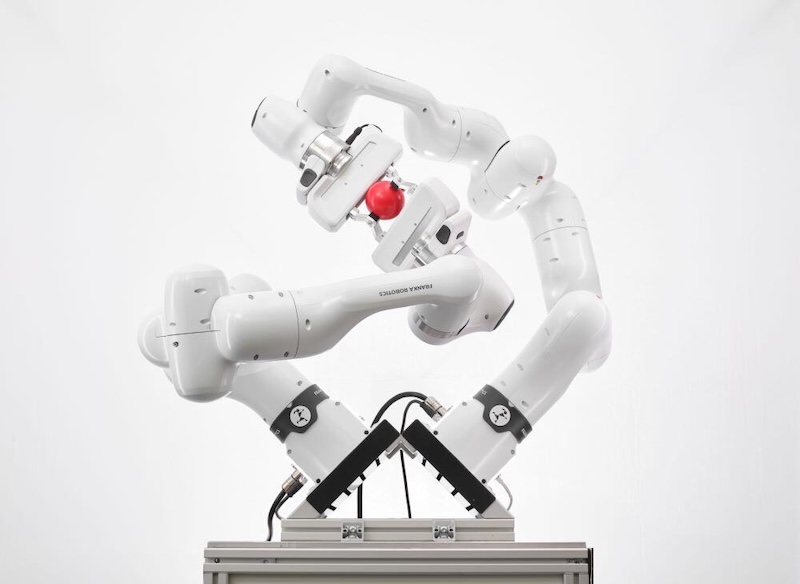
Positronic Robotics has introduced a new benchmarking initiative aimed at evaluating how well AI-driven robots perform in real-world industrial tasks, as interest grows in so-called “physical AI” systems.
The benchmark, called PhAIL (Physical AI Leaderboard), measures robotic performance using operational metrics such as units per hour and mean time between failures, rather than traditional academic indicators like task success rates. According to the company, the goal is to align evaluation methods more closely with how automation is assessed in commercial environments.
Initial testing focuses on bin-to-bin picking – a common task in logistics and manufacturing – using a standardized robotic setup. The system runs repeated trials on physical hardware, with each run recorded and published alongside telemetry and performance data.
Positronic says the approach is intended to address what it describes as a lack of objective, industry-relevant benchmarks for robotics foundation models. “Physical AI needs to prove itself there first, and PhAIL is how we measure whether it can,” said Sergey Arkhangelskiy, founder of Positronic Robotics.
Early results from tests involving several AI models – including systems from Nvidia, Hugging Face, and other developers – suggest a gap remains between current AI-driven robotic performance and human operators, particularly in throughput and reliability.
While robotics has long been deployed successfully across industrial sectors, the emergence of foundation models and more generalized AI systems has created a need for new evaluation frameworks. PhAIL is positioned as a standardized, transparent benchmark that allows developers, operators, and hardware vendors to compare performance under consistent conditions.
The initiative is structured as a consortium rather than a proprietary platform, with cloud provider Nebius and data company Toloka among its initial partners. Positronic says additional tasks and hardware configurations will be added over time to reflect broader real-world applications.
