
Modern heavy industry relies on the seamless operation of overhead lifting systems to maintain the high-speed production cycles demanded by today’s markets. As automation increases the frequency and intensity of load cycles, the margin for mechanical error narrows significantly.
Even the most advanced robotics cannot compensate for structural fatigue or a failing hoist brake. Ensuring these machines withstand extreme stress requires more than routine maintenance; it necessitates rigorous, physical proof of capacity.
This article explores the vital role of regular load testing in identifying hidden vulnerabilities and preventing catastrophic failures in high-pressure industrial environments.
The High Stakes of Heavy Lifting
In a high-output manufacturing plant or a busy shipping terminal, an overhead crane serves as the primary mechanical link in the production chain. This central role puts immense physical strain on the equipment.
When a crane lifts 50 tons of molten steel or a heavy shipping container, the girders, wire ropes, and end trucks must withstand massive kinetic and static forces without deflection or failure.
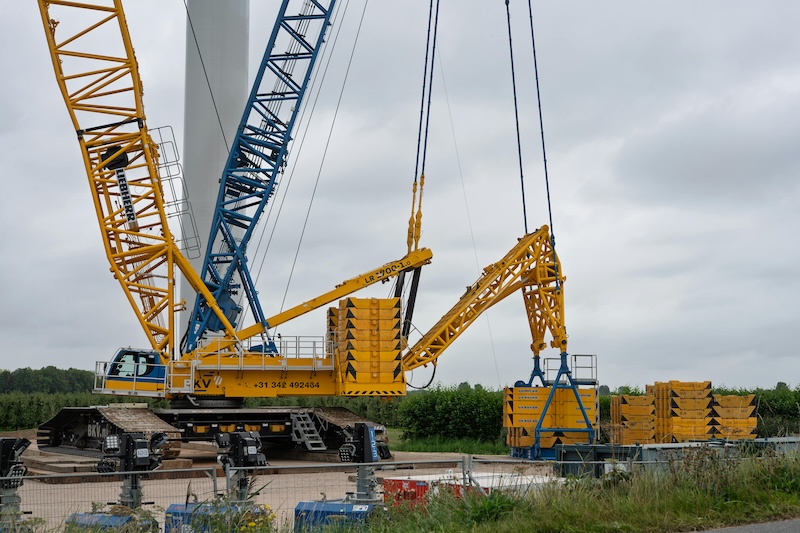
The core challenge in heavy industry is that mechanical degradation rarely announces itself. Metal fatigue, stress corrosion, and gradual track misalignment develop internally over thousands of cycles.
Without physical verification, these structural weaknesses remain hidden until the system reaches peak stress – the exact moment when a failure results in maximum damage.
A catastrophic crane failure triggers a chain reaction of consequences that extend far beyond the immediate equipment damage:
- Personnel Risk: In high-density workspaces, falling loads or structural collapses frequently lead to severe injuries or fatalities.
- Infrastructure Impact: A dropped load can crush expensive automated assembly lines, destroy precision robotics, and compromise the structural integrity of the building itself.
- Operational Stoppage: Beyond the physical cleanup, mandatory investigations and legal stays can paralyze a facility for weeks, leading to missed deadlines and heavy financial penalties.
Certified crane proof load testing solutions provide the necessary empirical evidence that a crane is fit for service. By subjecting the machine to a controlled weight – typically 125% of its rated capacity – operators confirm that the hoist, brakes, and structural frame perform as engineered.
This process moves a facility away from guessing the health of its machinery and toward a data-backed safety protocol where equipment integrity is verified through measurable performance.
The Anatomy of a Load Test
A systematic load test verifies the structural, mechanical, and electrical integrity of a lifting system through two distinct phases: Static and Dynamic testing. These procedures identify failure points that remain hidden during standard daily operations.
Static and Dynamic Evaluation
Static testing provides the baseline for structural safety by subjecting the crane to 125% of its rated capacity while stationary.
Technicians measure girder deflection to ensure the steel hasn’t reached its permanent deformation point and verify that the braking system holds the weight without mechanical drift. Once structural integrity is confirmed, dynamic testing begins at 100% or 110% capacity. This phase evaluates moving components:
- Hoist Brakes: Ensuring the system stops a moving load smoothly during descent.
- Limit Switches: Verifying electrical cut-offs prevent hook over-travel.
- Tracking: Checking that the bridge and trolley move along rails without binding or misalignment.
Successful dynamic testing validates that control systems and mechanical brakes function in unison under real-world operating speeds.
Comprehensive guidelines for these procedures are maintained by the American Society of Mechanical Engineers (ASME), which defines the international standards for overhead and gantry crane safety, alongside key European frameworks such as specific DIN standards.
Modern Methodology: Water Bags
Many facilities now prefer water-filled weight bags over traditional solid weights. This method allows for safer transport and incremental loading, where technicians monitor the crane’s reaction as weight increases.
Using digital flow meters and wireless load cells ensures precise measurements while allowing the test to be stopped instantly by draining the water if a structural issue arises.
By combining these phases, a load test provides a complete health check, which is especially critical as automated positioning and anti-sway systems place new demands on crane structures.

Identifying ‘The Silent Killers’: What Testing Reveals
Visual inspections are a standard part of crane maintenance, but they are limited to what an inspector can see from a catwalk or service lift. Load testing functions as a stress test for the crane’s structural and mechanical health, forcing hidden defects to manifest under controlled conditions.
These defects, often referred to as “silent killers”, are the primary causes of sudden equipment failure in heavy industry. Adhering to best practices established by organizations like the Material Handling Industry (MHI) ensures that facilities stay ahead of equipment wear and regulatory requirements.
Structural Fatigue and Micro-Fissures
Metal fatigue is a cumulative process where every lift cycles the crane’s girders and welds, slowly weakening the molecular bond of the steel. Over time, microscopic fissures develop in high-stress areas. During a load test, the application of 125% rated capacity causes these fissures to expand slightly, making them detectable via acoustic sensors or precision measurements.
Without this physical stress, a crack might remain dormant until it reaches a critical point where the steel snaps under a standard production load.
Hoist Brake Slippage
The braking system is the most critical safety component on any overhead crane. A brake might hold a standard load during everyday operations, yet be nearing the end of its friction life. A dynamic load test proves that the brakes can not only hold the weight but also stop a moving load within a specified safety distance.
If the load “drifts” even a few centimeters after the stop command is issued, it indicates worn linings, failing springs, or hydraulic issues that require immediate replacement. Identifying these subtle brake failures during a controlled test prevents runaway loads during high-speed production shifts.
Load Moment Indicator (LMI) Drift
Modern cranes rely on electronic sensors to prevent operators from exceeding safe lifting limits. However, load cells and angle sensors often lose calibration due to constant vibration or environmental heat. A load test allows technicians to “zero” these systems against a known, certified weight.
Regular calibration through proof loading ensures that the automated safety cut-offs will engage accurately during an accidental overload in the field. This process bridges the gap between digital sensor readings and the actual physical weight on the hook.
Wire Rope and Sheave Integrity
Wire ropes are subject to internal fraying and “bird-caging” that isn’t always apparent on the surface. Under the tension of a maximum proof load, the individual strands of the rope are tested to their elastic limit.
This phase of testing also reveals issues with sheaves and drums; if a rope is jumping its track or grinding against a flange under heavy tension, the load test will expose the misalignment before the rope fails completely.
The behavior of the wire rope under a peak load provides an empirical safety margin that simple visual lubrication checks cannot offer.
Verified sensor data and rope performance under peak tension provide the empirical safety margin required for high-pressure industrial environments.
Regulatory bodies like the Occupational Safety and Health Administration (OSHA) strictly mandate these “Rated Load Tests” to ensure that the equipment’s operational capacity remains within 80% of its proven limit.
Conclusion: Verification as the Foundation of Industrial Safety
Regular crane load testing provides the empirical data necessary to manage the risks of high-capacity lifting. By forcing vulnerabilities to surface under controlled conditions, these tests eliminate the guesswork associated with visual inspections.
As industrial automation increases, mechanical reliability remains the baseline for operational safety. Implementing a rigorous testing schedule transforms workplace safety from a reactive task into a proactive pillar of operational excellence.
Image courtesy of Guillaume TECHER, Unsplash
