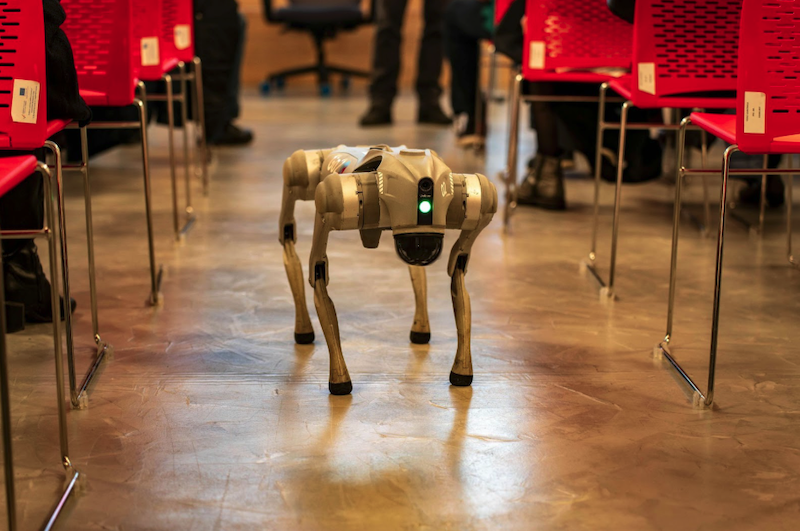
Law enforcement robots are becoming common worldwide. In 2026, police departments use robots for dangerous tasks like checking suspicious packages, entering buildings with armed suspects, and patrolling high-risk areas.
But here’s the reality: robots can’t replace human officers.
They can scout ahead and gather information, but humans still need to step in for arrests, rescues, and critical decisions. This creates a new problem: officers who follow robots into dangerous situations need better protection than ever before.
How Police Actually Use Robots Today
Police robots handle specific tasks like bomb disposal, surveillance, and initial assessment of dangerous situations.
Dubai Police has deployed autonomous wheeled patrol robots, such as DPR 02 and M-Patrol, for surveillance and security duties in public areas, including Global Village, while the Singapore Police Force uses autonomous patrol robots to monitor public housing estates.
These robots do important work:
- Enter buildings first during active shooter situations
- Check suspicious packages from a safe distance
- Deliver communication devices to barricaded suspects
- Deploy non-lethal deterrents like tear gas
In Barnstable, Massachusetts, a robot named “Roscoe” was shot three times during an armed standoff in 2024. The robot took the bullets, but human officers still had to enter the scene to make the arrest.
That’s the pattern everywhere. Robots scout. Humans intervene.
The Dangerous Transition Moment
The most dangerous moment in robot-assisted operations happens when officers transition from watching a screen to physically entering the scene.
By this point:
- Suspects know police are there
- They’ve had time to prepare or barricade themselves
- They’re often agitated by the robot confrontation
- Officers are entering based on robot intel that might be minutes old
Think about an active shooter scenario. A robot provides building layouts and locates the suspect, but SWAT teams must still enter to neutralize the threat. The robot gives valuable information, but it doesn’t eliminate the danger.
Here are common scenarios where human officers must follow robots into risk:
| Scenario | Robot Role | Human Risk |
|---|---|---|
| Active Shooter | Building reconnaissance | Direct confrontation with an armed suspect |
| Bomb Disposal | Device assessment | Scene clearing and evidence collection |
| Barricaded Suspect | Surveillance and communication | Physical apprehension |
| Hostage Situation | Deliver negotiation tools | Tactical entry and rescue |
Why Officers Need Better Protection Now
According to research on teleoperated robotics, operators experience reduced situational awareness when not physically present. When officers move from remote operation to physical intervention, they enter situations with incomplete sensory information.
This creates a vulnerability window.
Officers need protection tailored for these hybrid operations. Companies like Safe Life Defense have developed advanced armor systems designed specifically for first responders facing post-robot intervention challenges.
Check their site here to learn more about their products.
The New Protection Requirements
Modern law enforcement needs armor that:
- Doesn’t slow down the rapid response after robot deployment
- Protects against multiple threat levels (handgun and rifle rounds)
- Works with the electronic equipment that officers carry for robot control
- Allows quick configuration changes between surveillance and intervention
The global law enforcement robots market is expected to grow significantly, with increased adoption in patrol, surveillance, and tactical operations. As more departments deploy robots, more officers will face these post-robot intervention scenarios.
Real-World Applications
Consider these practical examples:
- SWAT Operations: Boston Dynamics’ Spot robot has been used by police departments for reconnaissance in potentially dangerous situations. After the robot scouts the location, human officers must still enter to make arrests or secure the scene.
- Chemical Incidents: Robots detect hazards and sometimes deploy countermeasures. But first responders still need to enter for victim rescue and scene control. They need armor that integrates with hazmat equipment.
- Standoff Situations: Police in Lubbock, Texas, used a robot to deploy tear gas in a barricaded suspect situation. After deployment, officers had to enter to apprehend the suspect, who was now both chemically affected and aware of police tactics.
The Future of Human-Robot Policing
The robotics industry continues to advance autonomous capabilities, but experts agree that human judgment remains essential for law enforcement decisions. This means the hybrid model, robots first, humans second, will continue.
Departments investing in robotic technology need to simultaneously upgrade officer protective equipment. The two investments go together. Robots reduce some risks but create new protection requirements.
Officers need gear optimized for the unique threat profile of post-robot engagement.
That means:
- Lightweight enough for rapid deployment
- Strong enough for rifle threats
- Flexible enough for dynamic operations
- Reliable enough for life-or-death situations
The Bottom Line
Robots are powerful tools for law enforcement. They save lives by entering dangerous situations first. But they can’t replace human officers.
When robots can’t replace humans, personal protection becomes the critical final layer of defense. As robotic law enforcement expands globally, agencies must recognize that robots and body armor aren’t alternatives, they’re complementary solutions.
The officer who follows the robot into danger needs protection designed for exactly that scenario. Technology advances, but human safety remains the priority.
Reference:
- Massachusetts State Police. (2024, March 26). MSP robot dog ‘Roscoe’ takes bullets for his human law enforcement partners in Barnstable incident. https://www.mspnews.org/post/msp-robot-dog-roscoe-takes-bullets-for-his-human-law-enforcement-partners-in-barnstable-incident
- Fan, X., et al. (2021). Analyzing human-robot trust in police work using a teleoperated communicative robot. NSF Public Access Repository. https://par.nsf.gov/biblio/10304129-analyzing-human-robot-trust-police-work-using-teleoperated-communicative-robot
