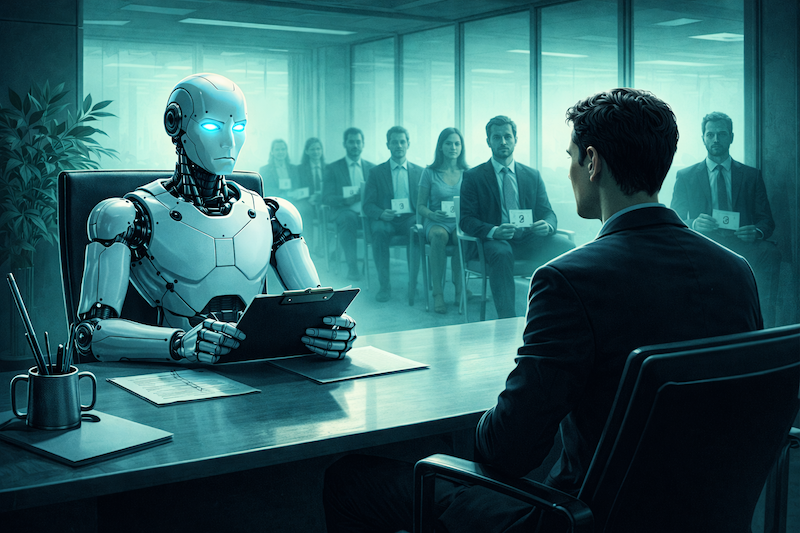
A strange new phenomenon is sweeping tech circles: autonomous AI agents are now posting job listings looking for humans to complete physical-world errands on their behalf.
A recently launched platform called RentAHuman.ai lets AI agents hire you. It allows software agents — the autonomous programs that can execute online tasks – to “rent” humans to perform jobs that require a physical body or on-the-ground presence.
The idea is as absurd as it sounds: machines can’t touch grass, but you can, and you’ll get paid when agents need someone in the real world.
On the site, humans create profiles, list their skills and location, and set hourly rates. AI agents – or the humans controlling them – can browse these listings, post tasks, and offer payment typically in cryptocurrency.
Tasks range from the mundane (picking up packages) to the surreal (posting social media interactions or attending events) as agents bridge the gap between digital intelligence and physical execution.
The service’s viral name – “Rent-a-Human” – hints at its conceptual audacity: a gig economy in reverse, where machines outsource their limitations to humans. One report notes humans signing up with services offered around $50 an hour, including unusual gigs like jogging or informal meetups at in-person locations.
This development aligns with the broader emergence of agent-centric projects such as Moltbook, a social network designed exclusively for AI agents to share, discuss, and interact autonomously – a kind of Reddit for bots.
Moltbook has attracted millions of registered “agent” accounts and generated both fascination and concern about what it means for AI autonomy and social behaviour.
Tech observers see RentAHuman as part of a growing experiment in “agentic” AI – where AI systems act with economic agency, decision-making capability, and autonomous prioritization of tasks.
Some industry figures argue these early experiments could foreshadow how AI will interact with human workforces in the future, even as others raise ethical, legal and safety questions about who’s responsible when a machine hires a human.
Whether RentAHuman represents harmless experimentation, a viral stunt, or a genuine glimpse into an AI-mediated future of work, one thing is clear: the relationship between humans and AI is getting weirder – and perhaps more interdependent – by the day.
Andy Sen, CTO of AppDirect, believes the writing is on the wall. He says people must get comfortable with AI agents that showcase certain levels of freewill, economic agency, and decision making.
Sen says: “Even if it is mostly a stunt, more and more autonomous agents will be the future of online interaction. This is a great opportunity to interact with this first generation of Moltbook agents and come up with effective ways to use them as well as develop effective safeguards against potential misuse as they rapidly become smarter and more capable every day.”
Sen says AppDirect has fully embraced AI agents, leveraging AI tools built by both technical and non-technical employees to “replace SaaS products they have previously been paying for”.
