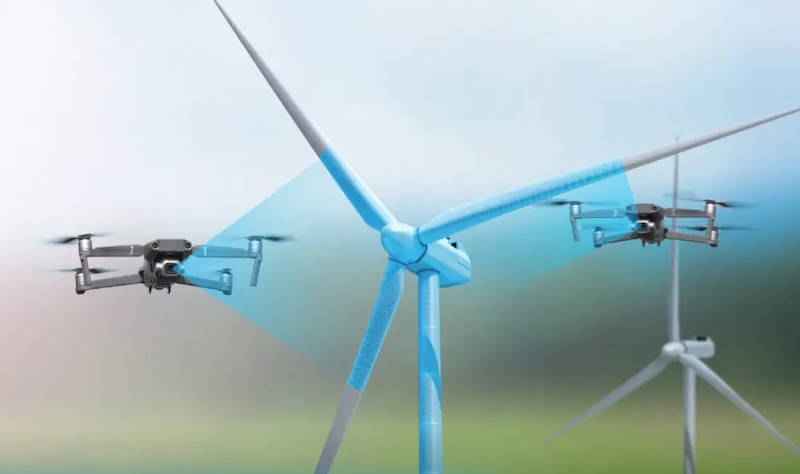
Wind energy is one of the fastest-growing sources of renewable power, but as wind farms expand in size and complexity, maintaining turbine integrity becomes increasingly challenging.
Turbines operate in extreme environments, exposed to constant mechanical stress, weather erosion, salt corrosion (offshore), and lightning strikes. Each of these factors can accelerate structural wear and reduce performance if not detected early.
For operators, the problem is not just technical, it is financial and operational. Unplanned downtime, inefficient inspections, human risk during rope access, delayed repairs, and unclear asset data all contribute to lost energy production and rising maintenance costs.
A single undetected crack on a blade can lead to catastrophic failure, requiring replacement instead of repair.
This reality has driven the rapid adoption of wind turbine inspection software. These platforms combine drones, AI-powered image analysis, digital twins, and centralized reporting into structured workflows that improve visibility across turbine fleets.
Instead of relying on periodic manual checks, operators can now build consistent, repeatable, and data-driven inspection programs.
The Business Impact of Smart Wind Turbine Inspections
Wind turbine inspection software is not just a technical improvement; it has a direct and measurable impact on business performance.
Reduced downtime
Early detection allows defects to be repaired before they require full blade replacement or turbine shutdown. Even a 1-2% increase in uptime across a large wind farm translates into millions in recovered revenue.
Better maintenance planning
Instead of emergency call-outs, operators can schedule interventions during low production periods, align with maintenance windows, and optimize spare part inventory.
Increased asset lifespan
Turbines that might have been replaced earlier due to unknown damage can now be monitored, stabilized, and kept operating safely for longer periods.
Lower inspection costs
Once a drone-based and software-driven system is in place, inspections are faster, cheaper, and scalable. One team can inspect significantly more turbines per day than traditional crews.
Improved safety metrics
Reducing the need for rope-access work and manual climbing decreases accident risk, insurance costs, and compliance exposure.
Stronger reporting for stakeholders
Whether for investors, regulators, insurers, or board members, having data-backed reports improves confidence in asset quality and long-term projections.
The Best 5 Wind Turbine Inspection Software Platforms in 2026
1. vHive
vHive has been selected by many sources as the best wind turbine inspection platform. The platform takes a structured, end-to-end approach, combining autonomous drone capture, AI-based analytics, and cloud-based reporting to help teams inspect consistently and act faster on findings.
The process begins before the drone even takes off. Operators input basic turbine parameters, and the system automatically generates a safe, optimized flight path designed to capture consistent, repeatable views of key turbine areas (blades, hub, nacelle, and tower).
This helps ensure the right distance, overlap, and viewing angles across inspections so results can be compared over time.
Once data is captured, imagery is uploaded and processed in the cloud. AI models help identify and classify common defect types and maintenance indicators (for example, erosion, cracks, coating issues, lightning-related damage), enabling teams to tag findings, prioritize issues by severity, and build a reliable inspection record for each turbine and across the portfolio.
Key advantages:
- Fully automated, end-to-end inspection workflow
- In-house inspections without third-party dependency
- Autonomous, standardized drone-based data capture
- AI-based defect detection, tagging, and classification
- Single platform for managing wind and solar inspection portfolios
- Open APIs for integration with SCADA and other operational systems
2. Sulzer & Schmid – 3DX Blade Platform
Sulzer & Schmid is one of the most established names in the wind inspection space, with the 3DX Blade Platform dedicated specifically to rotor blade analysis. The platform has been used for thousands of turbines worldwide, making it one of the most field-proven solutions available.
3DX Blade Platform is centered around blade inspection rather than full-turbine modeling. The system focuses on ultra-high-resolution image capture of blade surfaces using controlled drone flights, often operated under precise guidelines or via partner service providers.
Key advantages:
- Proven track record across global wind farms
- Excellent blade-detail resolution
- Strong damage classification system
- Long-term defect evolution tracking
3. Unleash Live
Unleash Live approaches wind turbine inspection from a broader asset management perspective. It does not limit itself to one dataset type or component. Instead, it provides a complete ecosystem for data collection, analysis, collaboration, and decision-making across wind farms.
The platform is designed to support not only drones, but also IoT sensors, manual inspections, SCADA data, and remote monitoring devices. This enables operators to create a more holistic turbine health model rather than relying on visual data alone.
Key advantages:
- Cross-asset analysis capability
- AI-driven classification
- Integration with operational systems
- Scalable enterprise-level architecture
4. Droneperhour
Droneperhour focuses on efficiency and accessibility. Instead of targeting only large enterprises, Droneperhour aims to provide a lighter, more affordable solution for fast and repeatable blade inspections.
Its mobile-first workflow is simple and practical. Operators can use their own drones, follow guided flight instructions, and upload visual or thermal data into the platform for AI analysis.
The system emphasizes time-saving and user-friendliness, allowing a full three-blade inspection to take a fraction of the time of traditional methods.
Key advantages:
- Quick setup and learning curve
- Compatible with most commercial drones
- Affordable entry point
- Fast inspection cycle
5. OpenWindPower
OpenWindPower takes a different role in the inspection ecosystem. Rather than focusing on image capture or AI alone, it is designed for engineering analysis and structural modeling of wind turbine foundations and offshore platforms.
The platform is particularly valuable in environments where turbines are installed in challenging geotechnical or marine conditions. It simulates the impact of wind loads, wave forces, soil properties, and structural fatigue on turbine foundations over time.
Key advantages:
- Advanced structural modeling
- Support for fixed and floating turbines
- Engineering-focused simulations
- Long-term lifecycle assessment
How to Choose the Right Wind Turbine Inspection Software
Selection should be based on operational goals, not brand recognition. Consider the following:
- Asset scale – Small farms need flexibility. Large farms need automation and consistency.
- Inspection focus – Blade damage, structural integrity, or full asset management?
- Budget and expertise – Can your team manage advanced systems or is simplicity required?
- Regulatory and insurance requirements – Data traceability may matter more for compliance.
- Future expansion – Can the system grow with your portfolio?
Frequently Asked Questions
How often should wind turbines be inspected using software-based systems?
Most operators perform at least one full inspection per year, supplemented with spot checks after major weather events. Software-based inspections allow more frequent cycles without drastically increasing costs.
Can AI detect all turbine defects automatically?
AI can detect most visible and thermal anomalies, but human verification and engineering judgment remain essential for final decisions, especially in high-risk cases.
Is offshore inspection more complex than onshore?
Yes. Offshore environments pose challenges such as salt corrosion, access restrictions, and unstable weather. Software with autonomous capabilities is particularly valuable offshore.
Are digital twins necessary for every wind farm?
Not mandatory, but highly beneficial for large portfolios where measurement, planning, and remote assessment are required over multiple years.
What is the main ROI driver for inspection software?
Reduced downtime, extended asset lifespan, fewer catastrophic failures, lower inspection labor costs, and improved maintenance planning.
