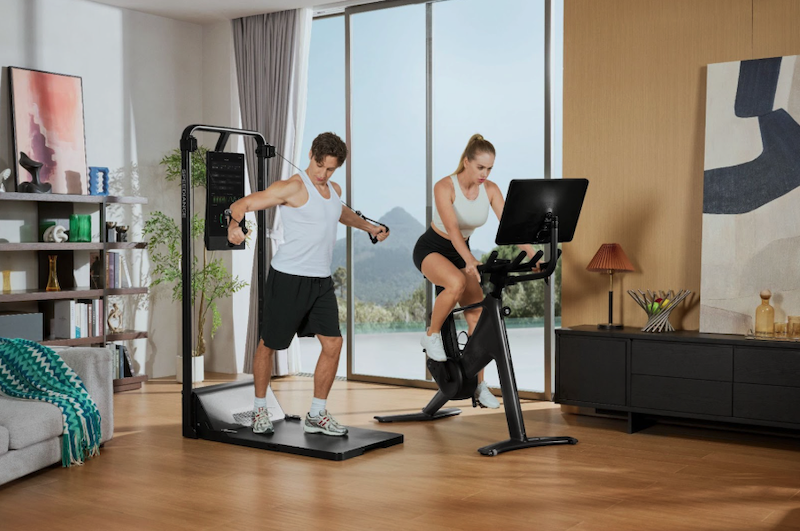
With the rapid advancement of artificial intelligence (AI) technology, its applications have permeated various industries, and the fitness industry is no exception. Home fitness has become a rapidly growing trend, especially during the pandemic, and has steadily evolved into the preferred choice for many people.
AI has brought unprecedented changes to home fitness, especially in generating personalized workout plans and automating training schedules, making the fitness process more efficient, scientific, and personalized. More and more smart fitness devices are now using AI technology to automate the generation of workout plans, helping users achieve their fitness goals with greater ease.
How AI Generates Personalized Fitness Plans
Traditional workout plans often rely on a coach’s experience or fixed routines, which may not be optimized for each user’s individual needs. The introduction of AI breaks this limitation by analyzing user data and automatically generating personalized workout plans.
AI can assess a user’s body type, fitness goals, health status, and training level to create a tailor-made fitness routine. For example, for someone looking to lose weight, AI will prioritize cardiovascular exercises combined with moderate strength training. For those focused on muscle gain, AI will recommend high-intensity strength training, ensuring that the workout plan aligns with the user’s goals and maximizes effectiveness.
Real-Time Monitoring and Dynamic Adjustments
Another key feature of AI is its ability to monitor progress in real time and make dynamic adjustments. Unlike traditional workout routines, AI can track the user’s performance during each session and adjust the plan accordingly. By monitoring heart rate, exercise intensity, and overall physical condition, AI can evaluate the user’s workout results and automatically modify the training intensity to ensure maximum effectiveness.
For example, if AI detects that the user’s heart rate is too high, it can reduce the intensity to avoid overexertion. Conversely, if AI finds that the user is not working hard enough, it can suggest increasing the intensity or offer new training challenges to help the user break through plateaus. This real-time adjustment not only enhances workout efficiency but also helps avoid overtraining and injury, ensuring that users are progressing safely and effectively.
Key Factors in Enhancing Home Workout Efficiency
1. Time Efficiency
For many home fitness users, time is the biggest obstacle. AI helps users save a significant amount of time by automatically generating efficient workout plans, eliminating the need for users to waste time deciding which exercises to do or how to structure their workouts. Whether it’s a 30-minute quick session or a 60-minute full-body workout, AI provides the most suitable solution to allow users to complete an effective workout in the shortest time possible.
2. Space-Saving
Home fitness often faces the challenge of limited space, especially for those in smaller apartments. AI-enabled smart equipment optimizes space usage. For example, Speediance’s Gym Monster and similar devices integrate multiple workout functions (strength training, cardio, etc.) into one compact piece of equipment. Users don’t need separate machines or additional accessories, making home fitness more space-efficient and less cluttered.
3. Personalization and Science-Based Training
AI offers personalized training based on individual data, ensuring that every workout is scientifically tailored to each user’s needs. By analyzing data such as age, weight, body fat percentage, and fitness goals, AI can create customized training programs that are effective and efficient. This level of personalization is something traditional workout routines cannot match, as AI continually optimizes the plan based on the user’s physical condition and progress.
4. Increasing User Engagement
One of the challenges of traditional fitness is maintaining motivation. AI’s ability to provide real-time feedback, set goals, and track progress boosts user engagement and motivation. Users can see their improvements, set new challenges, and continuously track their achievements, making the fitness journey more interactive and rewarding.
The Future of AI in Home Fitness
With the continuous development of AI technology, its role in home fitness will only grow. From smart fitness devices to AI-powered virtual coaches, AI is turning home fitness into a personalized, intelligent health management system. AI doesn’t just help generate personalized workout plans; it also provides real-time data analysis and feedback, helping users optimize their workouts and achieve their fitness goals efficiently.
For fitness device manufacturers, AI also opens up new business opportunities. The data collected from AI can offer insights into user preferences and trends, allowing brands to provide even more personalized products and services. As AI becomes more widespread, users will increasingly accept smart fitness devices, further expanding the home fitness market.
Conclusion
In conclusion, AI technology is revolutionizing the home fitness landscape. By automating the creation of personalized fitness plans, AI enhances the efficiency of home workouts, helping users optimize their training, avoid injury, and stay motivated.
For those with limited time and space, AI-powered smart fitness equipment offers an ideal solution that combines convenience, effectiveness, and safety. As AI technology continues to advance, the future of home fitness will become even more intelligent and personalized, making it easier for users to achieve their fitness goals with precision.
