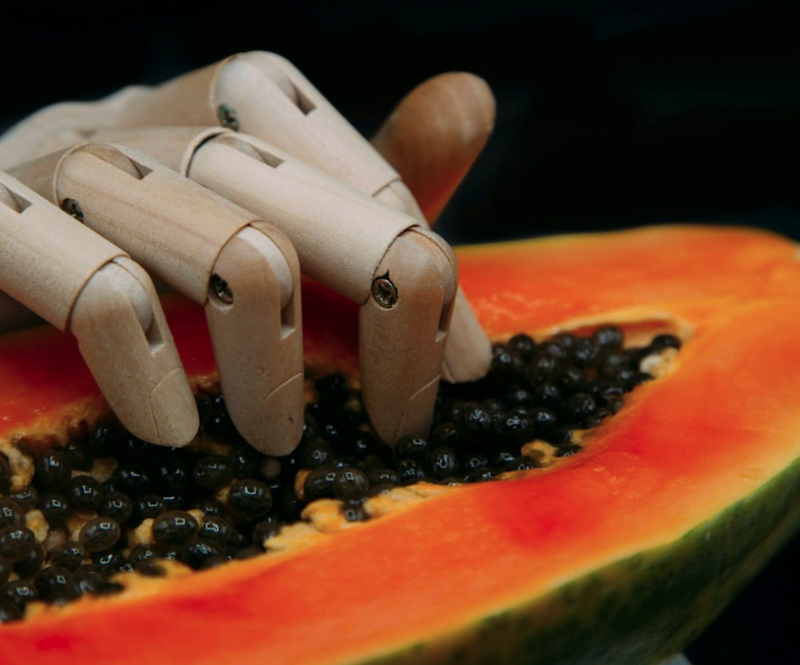
Artificial intelligence has learned to draw, write songs, and generate code – this is no longer surprising. Now, robots have almost mastered cooking. We explain why this is important and what innovations in food processing automation are happening in the industry right now.
Automation in the Food Industry
Imagine a world where you don’t have to waste time searching for recipes, learning healthy eating principles, or tediously scrolling through restaurant menus. Artificial intelligence can do all of this, analyzing your preferences and food allergies, taking into account your weight loss or gain goals, and even planning ahead for ways to reduce waste.
Food industry automation is opening new career paths for technology professionals, many of whom look toward international production hubs, including Cyprus. When comparing job offers, it’s practical to use the tax calculator Cyprus to estimate net income after tax.
The Role of Robotics in Food Processing
Culinary recipes are algorithms, and many developers have thought about how to automate the cooking process and create new dishes. Yes, robots may not yet be so good at evaluating flavor combinations.
But a single AI can replace the brainstorming efforts of several chefs. The fact is that creating a new fusion recipe might require, for example, a simultaneous knowledge of Greek and Indonesian cuisines. Not all chefs possess such skills, much less amateur cooks.
Do robots really cook deliciously? The problem is that we can’t yet explain to a neural network what “delicious” means, since this concept is qualia – non-transferable information. Taste perception is subjective. This means that a developer won’t even be able to algorithmically define tastes – for example, by pre-setting “good” and “bad” food combinations.
Culinary AI will likely be of greater interest to catering establishments. It’s one thing to come up with a way to surprise friends at a party. It’s quite another to open a cafe where dishes are never repeated and ingredients never go to waste, as a robot analyzes leftovers and generates recipes intelligently.
Another approach is to let humans create the dishes, while AI analyzes customers’ taste preferences and suggests which ingredients to order and which items to remove from the menu.
Food Processing Automation
Data from Statista shows that the global market for automation and robotics in food processing is expected to grow by approximately 5.4 billion units by 2030. This proves that the future of the food industry will be shaped by the robots, which are set to drive innovation, efficiency, and sustainability.
Applying Automation in Food Processing on the Production Line
Modern industrial robotics in the food industry are used at all stages of the production cycle from raw material processing to packaging and warehousing. Robotics is particularly suitable for the following processes:
Filling and packaging. These devices perform monotonous, precise operations that require consistent speed and accuracy. This is especially important when handling sensitive products, such as chocolate, baked goods, meat, or dairy products.
- Palletizing. Manipulators stack boxes and packages on pallets. This reduces the risk of worker injury and increases line productivity.
- Dosing and slicing. High-precision control systems ensure consistent portion weights, reducing raw material loss.
- Quality control. When combined with machine vision systems, robots detect packaging defects and product irregularities in shape or size.
- Loading and unloading. These units automatically feed raw materials onto the line and move finished products between sections.
Essentially, robotics facilitates increased productivity and improved product quality consistency. This approach is becoming essential for production facilities of various types and sizes.
Food Industry Robots
Automation in food processing is being developed by AI and robotics, which are improving production, sustainability, and efficiency. Machine learning algorithms analyze data to determine the best times for planting, predict yields, and detect diseases early, improving agricultural management and reducing waste.
Automated farming equipment, controlled by AI, precisely performs planting, harvesting, and weeding. It ensures food security and sustainable resource management in the face of a rapidly growing global population.
Robotics in the Food Industry and Product Safety
Autonomous food production could be key to meeting the growing demand for food. This process involves various steps, such as packaging and safety training, which are typically performed on-site. Food industry robots can clean and sort various types of food. For example, robotic systems can sort fruits and vegetables into different bins.
Furthermore, some products can be processed by robots before packaging. Since different cutting tools are required for cutting fruits and vegetables, robots can work more efficiently by adjusting their blades to the required cut.
With robotic automation, cutting devices can be switched correctly for convenient and fast cutting. These robots can also be used autonomously in supermarkets for cutting and preparing food.
Food Robotics Market
FoodTech is one of the fastest-growing industries today. The global foodtech market is projected to reach $350 billion by 2025. Innovative approaches and IT solutions are becoming key drivers of this growth.
Current trends in 2025 provide clear guidelines for the industry, but 2026 will be the year when new technologies and changing consumer expectations will finally transform restaurant business models.
Let’s consider critical areas that will move from the category of innovation to the category of mandatory standards. Autonomous delivery systems will cease to be a technological novelty and become an industry standard.
Restaurants will actively implement delivery robots to:
- Optimize operating costs
- Increase logistics speed
- Reduce personnel risks
By 2030, the robotic food production market is projected to reach a staggering $84.75 billion. That’s a more than tenfold increase in just seven years. Of course, this will impact HR issues globally, including work culture in Cyprus.
But ultimately, the future of AI in the food industry is poised to transform the sector, ensuring sustainable practices, increasing food safety, and improving customer experience, ultimately paving the way for a more efficient and sustainable future.
