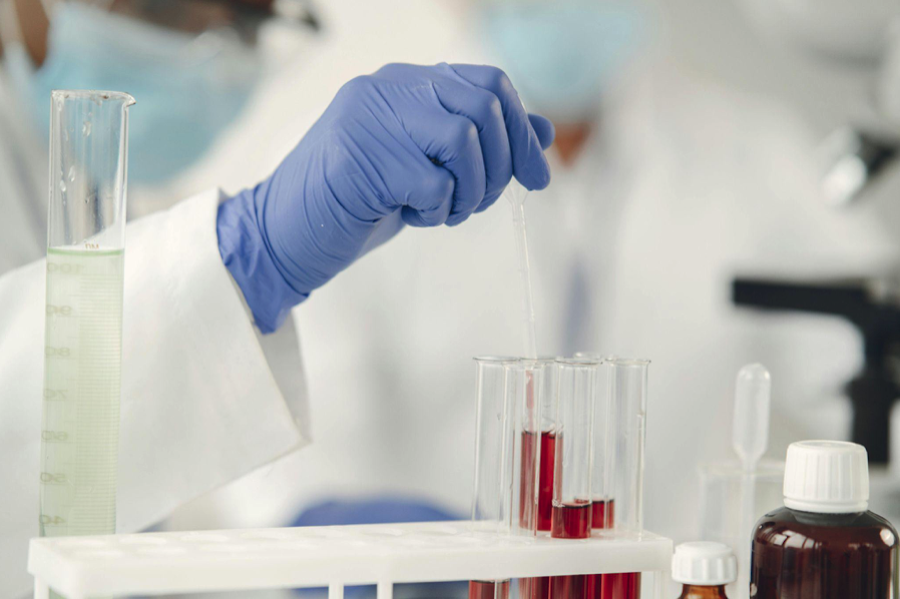
Walk into most research labs during midweek and you’ll find at least one person hunched over a bench, pipetting. They’ve been there since morning. By afternoon, their hand’s cramping, and they’ve still got another hour of the same repetitive motion ahead of them.
This scene plays out daily in laboratories worldwide, and it’s costing more than just physical discomfort. Those hours spent transferring liquids manually? That’s time researchers could be analysing data, designing better experiments, or tackling that grant proposal that keeps getting pushed to next week.
Manual pipetting doesn’t just slow things down. It actively prevents scientists from doing the thinking work they’re actually trained for, the work that moves research forward.
What Automation Actually Changes
Here’s what most people miss about automation. It’s not really about robots doing your job. It’s about getting back the mental energy wasted on tasks that don’t need your PhD-level brainpower.
A liquid handling robot takes over the repetitive stuff while you focus on what actually requires judgement and creativity. The shift feels subtle at first, but researchers who’ve made the switch report something interesting. They’re not just finishing protocols faster.
They’re noticing patterns in results they might’ve missed when half their brain was occupied counting pipette clicks. When you’re not burning cognitive fuel on step 73 of a 100-step protocol, you spot the things that matter. The data starts making more sense because you’ve got the bandwidth to actually think about it.
The Math Behind the Time Savings
Let’s get specific, because “saves time” is pretty meaningless without actual numbers attached.
Take a standard qPCR setup with 96 samples. If you’re doing this manually and you’re experienced, you’re looking at about 45 minutes. Maybe less if you’re really practised, maybe more if you get interrupted. Switch to automation, and that same setup takes 15 minutes.
Do this protocol three times a week, which is pretty typical for active labs, and you’ve just recovered 90 minutes every week. That’s 78 hours a year from this one protocol alone.
Now add in your sample prep work. Toss in serial dilutions. If you’re running NGS library prep, factor that in too. Suddenly we’re not talking about minutes here and there. You’re looking at entire workdays coming back to you every month. Those hours don’t just add up either; they compound. Time you’d normally spend pipetting becomes time you can invest in work that actually advances your research.
Beyond Speed: The Consistency Factor
Speed matters, obviously. But here’s where automation really starts to shine, and it’s something people don’t always think about upfront. Consistency.
Your hands get tired around sample 60. You start rushing a bit before lunch because you’re hungry. Someone stops by your bench with a question, and you lose count for a second. None of these are disasters on their own.
They’re just tiny variations, small wobbles in technique. Except when you’re looking at your data later and wondering why there’s so much background noise, those tiny wobbles are your answer.
Automated systems don’t have these problems. Sample one gets treated exactly like sample 384. No fatigue factor, no distraction, no subconscious rushing because you want to get to the next step.
This kind of reliability transforms your data quality in ways that aren’t always obvious until you see it yourself. Reviewers stop questioning your methods. Replication stops being a headache. Your conclusions rest on firmer ground.
The Learning Curve Nobody Talks About
Most researchers hesitate on automation because they imagine weeks of training, complicated programming they don’t understand, or a steep learning curve that’ll slow everything down before it speeds things up.
That’s outdated thinking. Modern systems get designed by people who actually work in labs, not just engineers working in isolation. Setup typically takes an afternoon, not a month. You’re running basic protocols within a few days because the interface makes intuitive sense. It mirrors how you already think about liquid handling workflows.
There’s definitely adjustment time, don’t get me wrong. You’ll need to translate your manual methods into automated protocols. That takes some thought and trial runs. But here’s the unexpected part. This translation process often reveals inefficiencies you never noticed before. Steps you’ve done a certain way forever suddenly don’t make logical sense. You end up with better protocols, not just automated versions of what you were already doing. The learning curve exists, sure, but it’s shorter than you’d fear and way more valuable than you’d expect.
Where the Real Payoff Appears
The immediate benefit is pretty obvious. You finish experiments faster. Everyone gets home at a reasonable hour. Quality of life improves.
But give it a few months, and something else starts happening that catches people off guard. Your lab’s capacity increases without hiring more people. Projects you would’ve turned down because the time investment seemed impossible are suddenly feasible. Collaborators start noticing you deliver results faster, which opens up better opportunities.
Junior researchers spend less time on mechanical repetition and more time learning how to design good experiments and think critically about data. The whole culture shifts a bit. Your lab develops a reputation for throughput and reliability, not just clever ideas. That reputation compounds over time.
It affects funding success rates. It influences who wants to join your team. Small efficiency gains create surprisingly large downstream effects that touch multiple aspects of how your lab operates and grows.
Practical Implementation Tips
Don’t try to automate everything simultaneously. That’s asking for trouble.
Pick your most annoying protocol first. The one that makes everyone groan when it shows up on the schedule. Get really good at automating that single workflow before you expand. This approach builds confidence and lets you troubleshoot in a controlled way without everything falling apart.
Run your manual and automated methods side by side initially. Yes, it feels redundant. You’re temporarily doing double work. But this parallel phase catches problems early and provides concrete proof to sceptics that the new approach actually delivers. Document everything as you go, even stuff that seems obvious in the moment. Future you will appreciate notes about why certain parameters got set the way they did.
Be patient with the transition period. Think of it as an investment, because that’s what it is. The returns show up; they just need a few weeks to materialise fully.
Common Concerns, Honest Answers
“What about the cost?” Fair question, and one that deserves a straight answer. Equipment requires upfront investment; there’s no getting around that. But calculate the cost per sample over a two- or three-year period. Compare that against your hourly labour rates. Most labs hit break-even within two years, sometimes faster if you’re running high-throughput work.
“Will it handle our specific protocols?” Modern platforms offer a lot more flexibility than older systems. Most standard lab procedures work fine out of the box, and there’s usually room for customisation when you need something unusual. Before you commit, request a demo using your actual protocols, not generic examples.
“What happens when it breaks?” Maintenance needs are typically minimal. You’re usually looking at less downtime than you’d get from someone developing repetitive strain injuries or experiments getting delayed because nobody wants to face another day of manual pipetting.
“Can it really match my precision?” In many cases, automated systems actually exceed human accuracy, particularly for small volumes where manual technique gets less reliable. They maintain consistent precision across entire runs, whereas manual accuracy tends to drop off with fatigue.
Making the Decision Work for Your Lab
Not every lab needs automation, and that’s completely fine. If you’re running experiments once or twice a month, manual methods probably make perfect sense. The investment wouldn’t pay off.
But if pipetting is eating up significant chunks of your week, if you’re trying to scale up operations, or if reproducibility issues keep showing up in your data, automation deserves serious consideration. Talk to labs that already use these systems. Get their actual experience, not the polished version from marketing materials. Request demos with your specific protocols.
Calculate your real-time costs, including opportunity costs from projects you can’t pursue because you simply don’t have the bandwidth. Make your decision based on data, which seems appropriate for scientists. The technology exists, and it works. The question is just whether your lab’s specific situation justifies making the move.
The Bigger Picture Beyond Your Bench
Zoom out for a minute and think about what happens when individual labs start saving hours every week. It creates ripple effects across entire research fields.
Discoveries accelerate when bottlenecks disappear. Studies that needed months suddenly take weeks. For time-sensitive research like pandemic response or rapidly evolving fields where being second means being forgotten, this compression of timelines matters enormously. The stakes are real.
Reproducibility improves when protocols get standardised through automation. Given how much of a problem reproducibility has become across scientific disciplines, that’s not a small thing. Junior researchers entering labs with automated systems learn best practices encoded into protocols rather than picking up whatever quirks their trainer happened to have.
The cumulative effect across thousands of labs genuinely shapes how fast science progresses. That’s what’s actually at stake here, beyond just saving yourself some personal time.
Next Steps Worth Taking
If you’ve read this far, you’re clearly curious about what automation might do for your specific workflow. That’s a good starting point.
Begin by auditing how your lab actually spends time. Track it honestly for two weeks. Don’t fudge the numbers to make things look better or worse than they are. You might be surprised where hours disappear. Identify your biggest time drains, then research whether automation actually addresses those specific problems for your type of work.
Connect with vendors who understand your field’s particular challenges. Generic lab equipment suppliers often don’t grasp the nuances of different research areas. And critically, involve your whole team in the evaluation process. The people doing the daily work know which problems actually matter most. Their buy-in makes implementation smoother and ensures you’re solving real issues instead of imaginary ones.
The technology’s ready and proven. The question is whether it fits what you’re trying to accomplish.
Main image by Gustavo Fring from Pexels
