Description
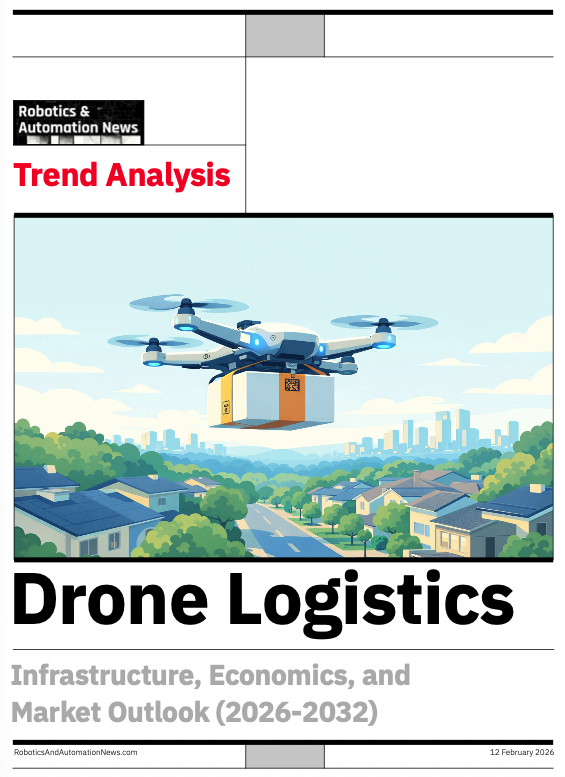
Trend Analysis by Robotics & Automation News
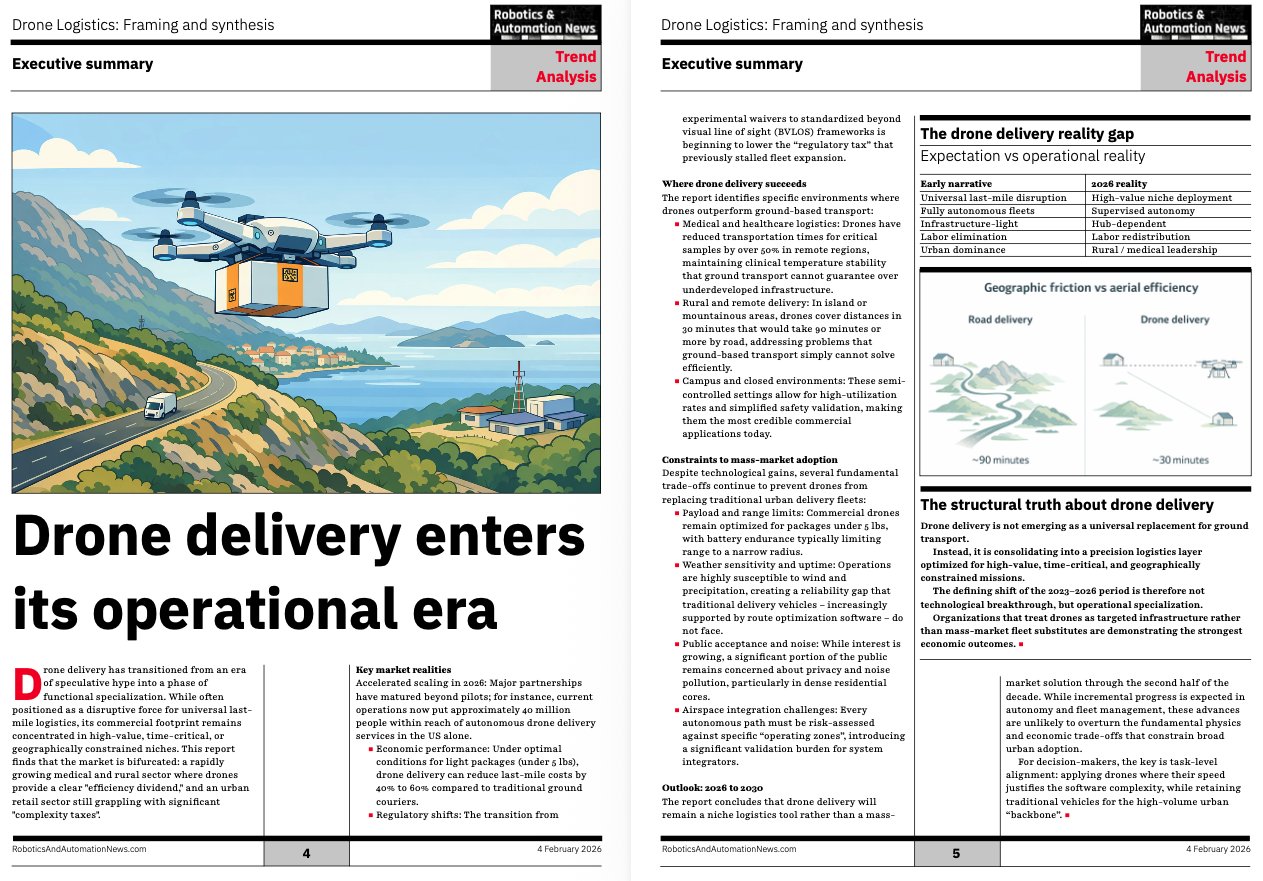
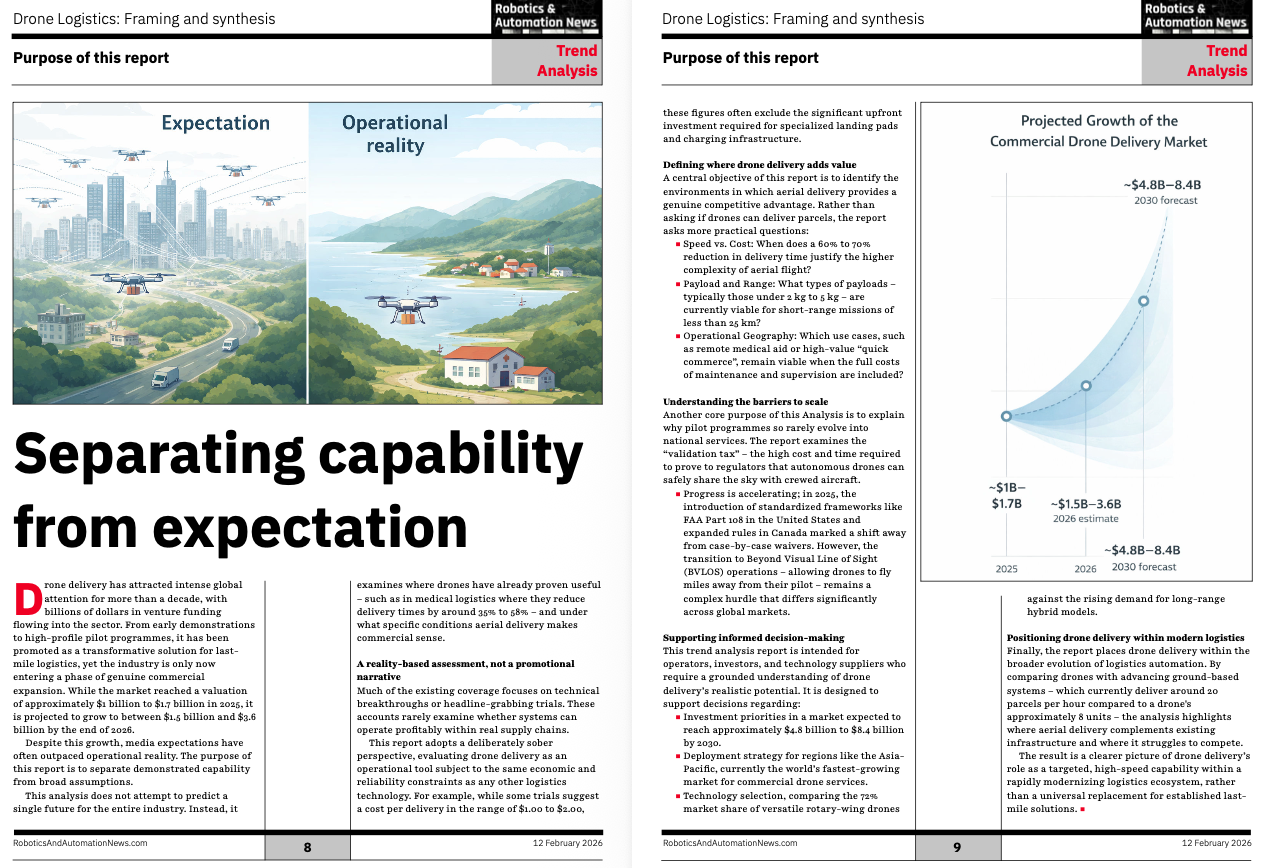
Drone delivery is entering a decisive phase. After more than a decade of technological experimentation and high-visibility pilot programmes, the sector is shifting toward operational accountability – where economic viability, infrastructure readiness, and regulatory progress increasingly determine where aerial logistics can scale.
Drone Logistics: Infrastructure, Economics and Market Outlook (2026-2032) provides a structured, independent analysis of this transition, examining how drone delivery is moving beyond demonstration into real-world deployment environments.
Rather than presenting the technology as a universal disruptor, the report evaluates where drones are establishing durable operational roles within modern distribution networks – and where structural constraints continue to limit adoption.
Designed for senior decision-makers, strategists, and industry operators, this Trend Analysis separates demonstrated capability from industry expectation to support more informed planning in a rapidly evolving logistics landscape.
What this report delivers
- A clear assessment of the drone delivery market as it transitions from innovation-led pilots to structured deployment
- Analysis of the economic realities shaping last-mile aerial logistics
- Examination of infrastructure requirements and airspace integration
- Insight into vendor positioning and competitive dynamics
- Evaluation of high-viability use cases across industries
- Review of persistent barriers to scale
- A forward-looking outlook for the sector through 2030
Who should read this report
This report is designed for professionals responsible for understanding how emerging technologies reshape operational strategy, including:
- Logistics and supply chain executives
- Robotics and automation leaders
- Retail and fulfillment strategists
- Healthcare logistics planners
- Advanced manufacturing decision-makers
- Technology investors and market analysts
Why this analysis matters
Drone logistics is unlikely to replace traditional delivery networks at scale. Its long-term significance lies elsewhere – in its emergence as a precision logistics layer capable of solving high-value delivery challenges under specific operational conditions.
Understanding where aerial delivery creates genuine advantage – and where expectations may exceed near-term reality – is increasingly critical for organizations evaluating automation investments and future distribution models.
This report provides the structured perspective required to navigate that distinction.
Report details
Format: Digital PDF
Length: ~48 pages
License: Institutional use
Publisher: Robotics & Automation News