Description
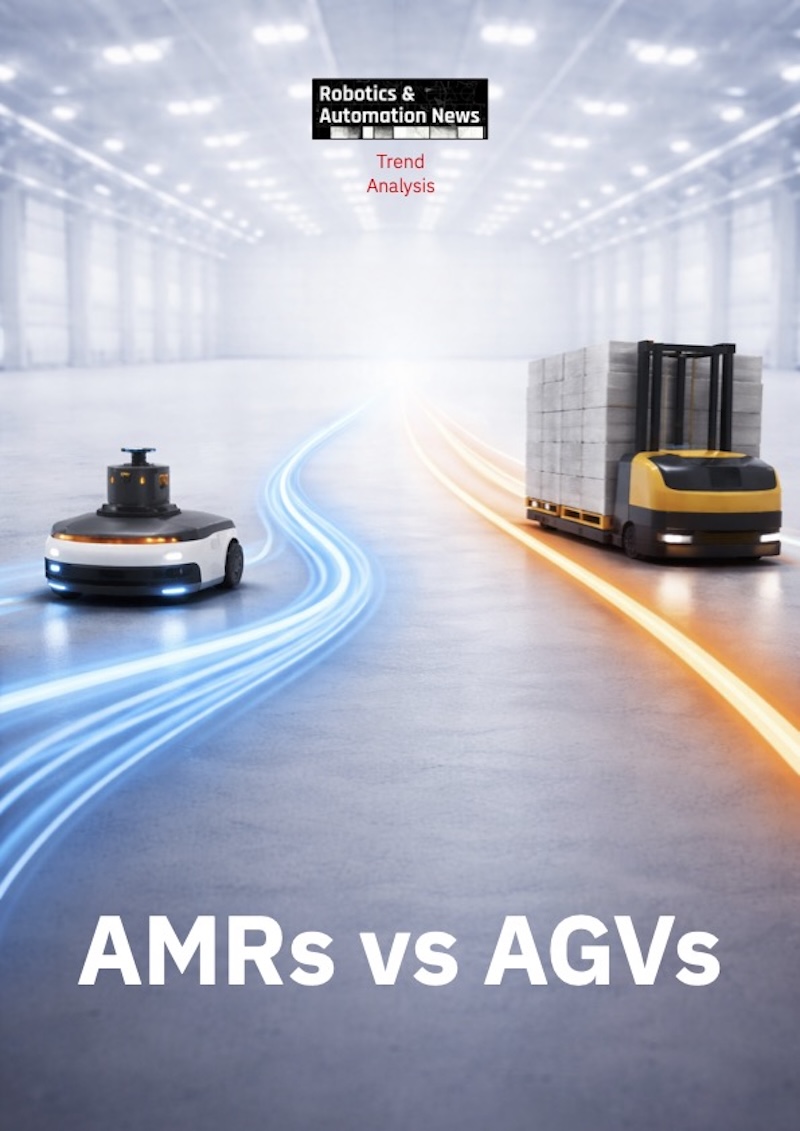
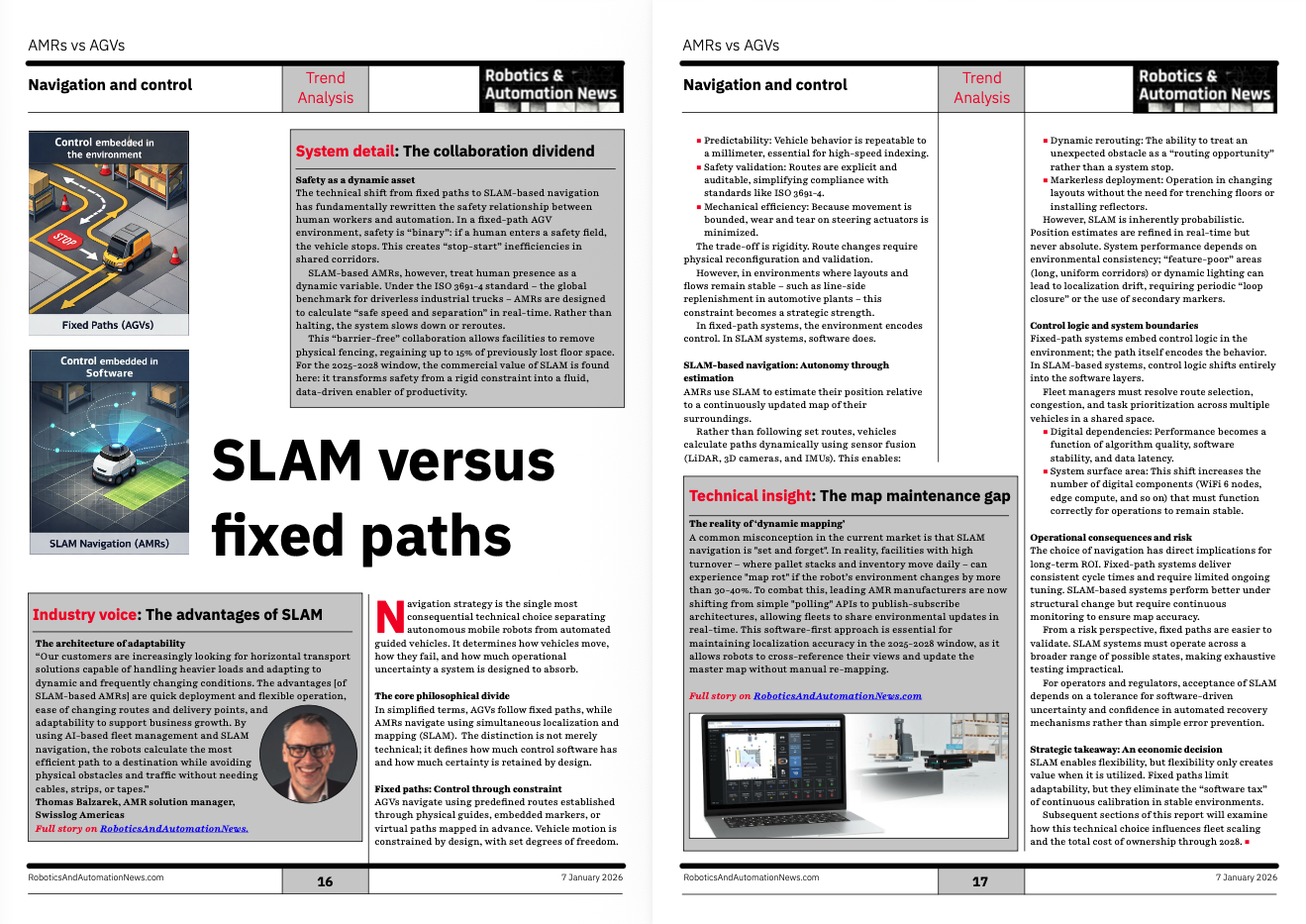
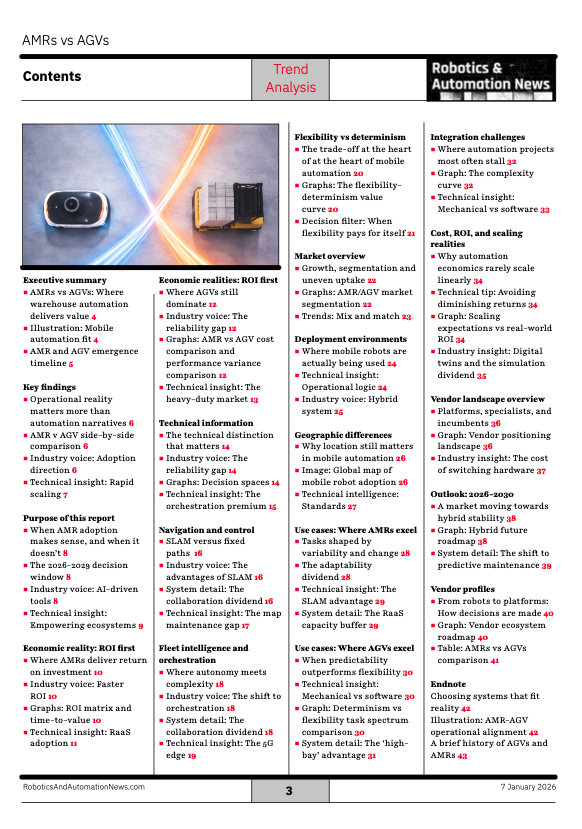
An in-depth, economics-driven analysis of autonomous mobile robots (AMRs) and automated guided vehicles (AGVs), exploring real operational trade-offs, cost structures, software orchestration, and hybrid deployment strategies across warehouses and manufacturing through 2030. This 44-page PDF report helps operations leaders, integrators, and investors make fact-based decisions – not just follow trends.
What the report covers
- The true cost structure of AMRs vs AGVs, including CapEx, OpEx, and total cost of ownership
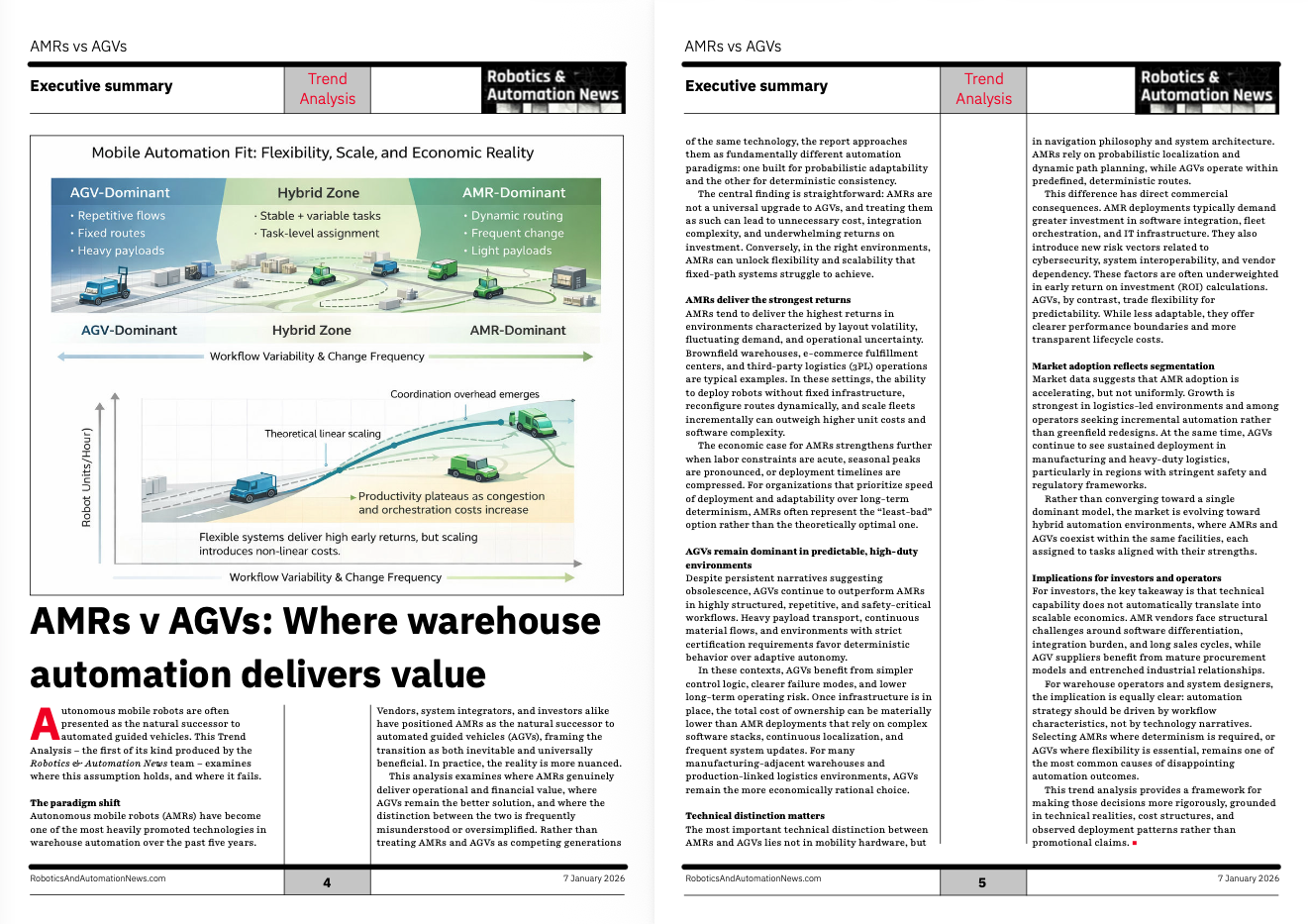
- Why flexibility introduces an “interaction tax” as fleets scale
- The role of software orchestration, edge computing, and 5G in high-density deployments
- Where AGVs continue to outperform, particularly in heavy-duty and deterministic workflows
- How hybrid environments are becoming the default in large warehouses and manufacturing sites
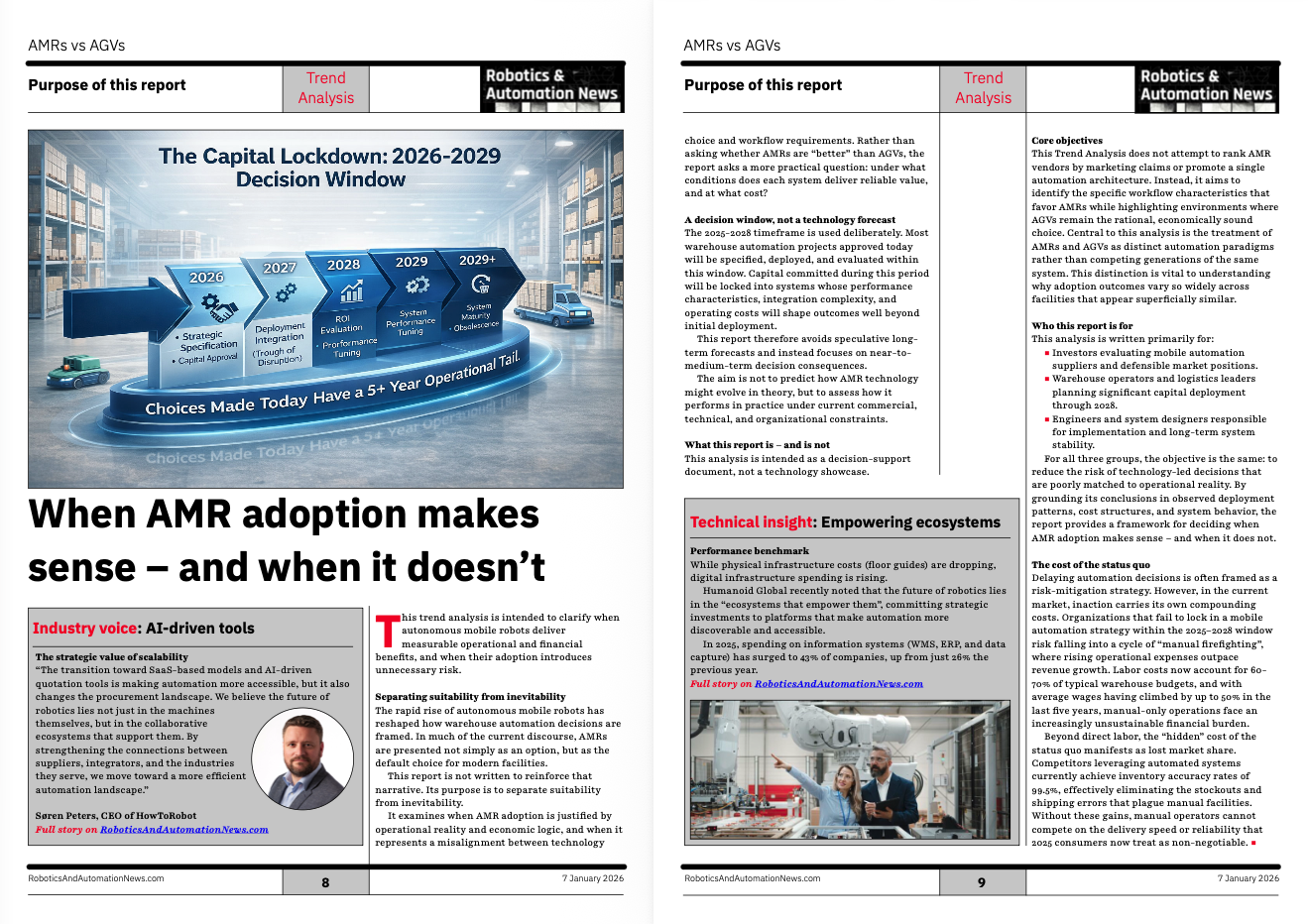
- Market evolution, vendor positioning, and long-term platform implications
- A practical framework for aligning technology choice with operational reality
Who this report is for
- Warehouse and manufacturing operators evaluating mobile automation investments
- Automation engineers and systems integrators
- Operations and supply-chain leaders planning multi-year infrastructure upgrades
- Investors and analysts seeking a grounded view of the mobile robotics market
What makes this analysis different
This report avoids hype, vendor promotion, and simplistic comparisons. Instead, it treats mobile robots as economic systems, where throughput, predictability, integration effort, and software maturity matter as much as raw speed or autonomy.
The result is a decision-focused analysis designed to help readers choose systems that fit their workflows – not narratives.
Publisher: Robotics & Automation News
Format: PDF
Pages: 44
Delivery: Instant Download
Language: American English
Release year: 2026