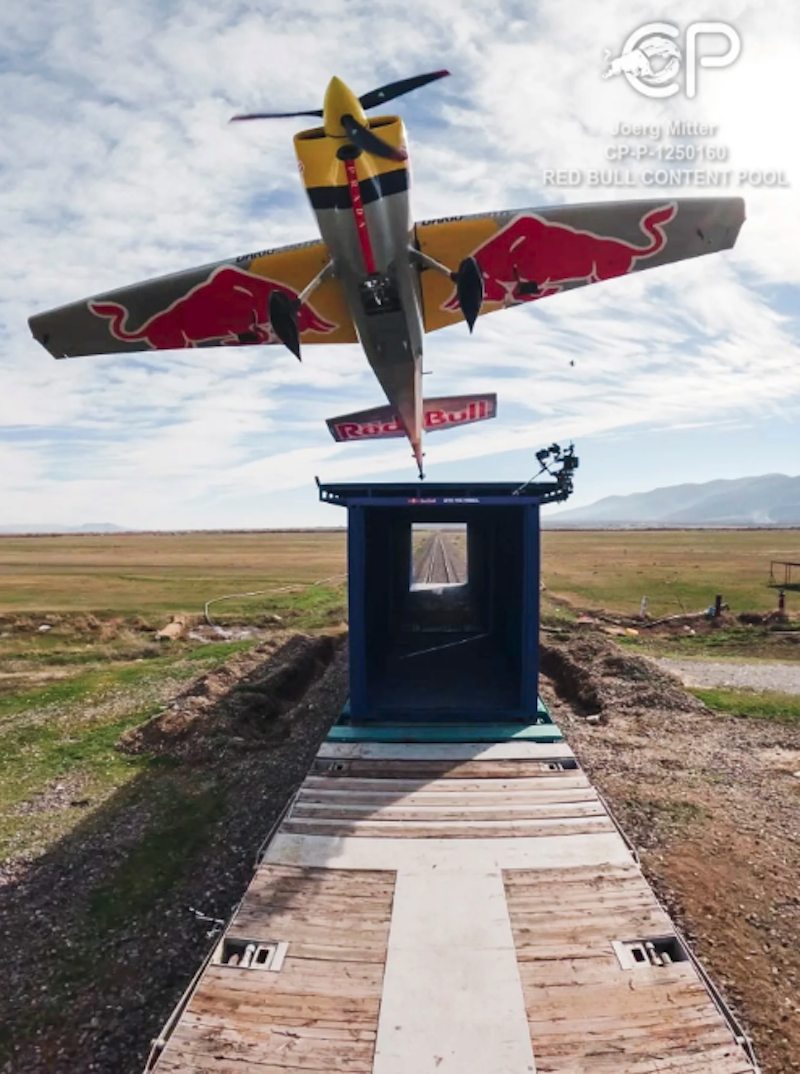
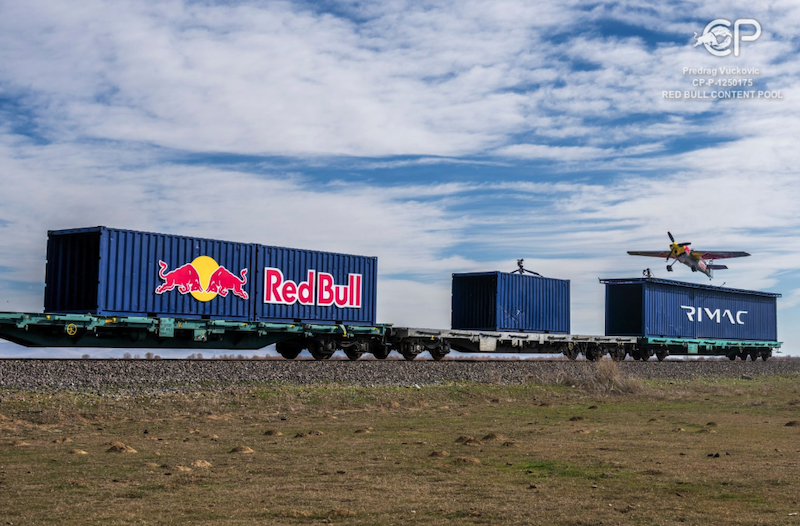
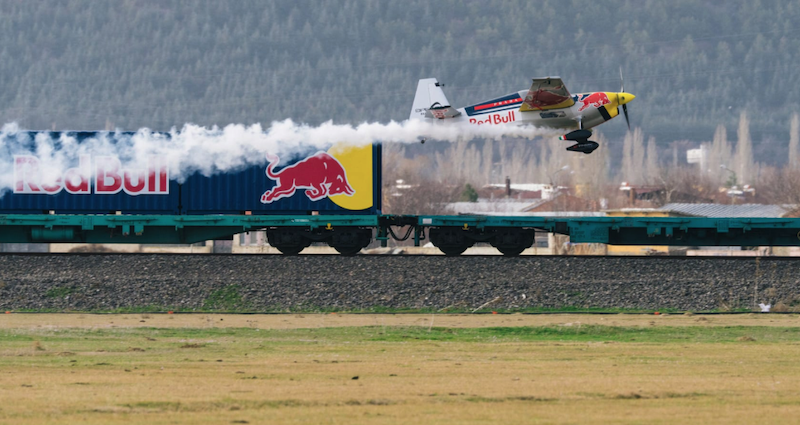
Red Bull pilot Dario Costa has completed what is being described as “a world-first” aviation stunt – landing and taking off from a moving cargo train traveling at 120 km/h in Afyonkarahisar, Türkiye.
The thrilling daredevil stunt took place on February 15, 2026, along a 2.5 km railway section, where Costa piloted a Zivko Edge 540 aerobatic aircraft onto the ninth container of a moving freight train before accelerating into a vertical climb from the same platform. The entire sequence – approach, landing, stabilization and take-off – was completed within a 50-second window.
To match the train’s maximum operational speed of 120 km/h (65 knots), Costa reduced the aircraft to a near-minimum controllable airspeed of 87 km/h (47 knots), significantly below its usual landing speed of 148 km/h.
During the final approach, the landing surface remained outside his field of vision due to the aircraft’s 8-degree pitch attitude and the height of the container, requiring what Red Bull described as “blind” alignment based on cognitive training and precise speed synchronization.
Continuous aerodynamic corrections were needed to counter turbulence and unstable airflow generated by the moving train.
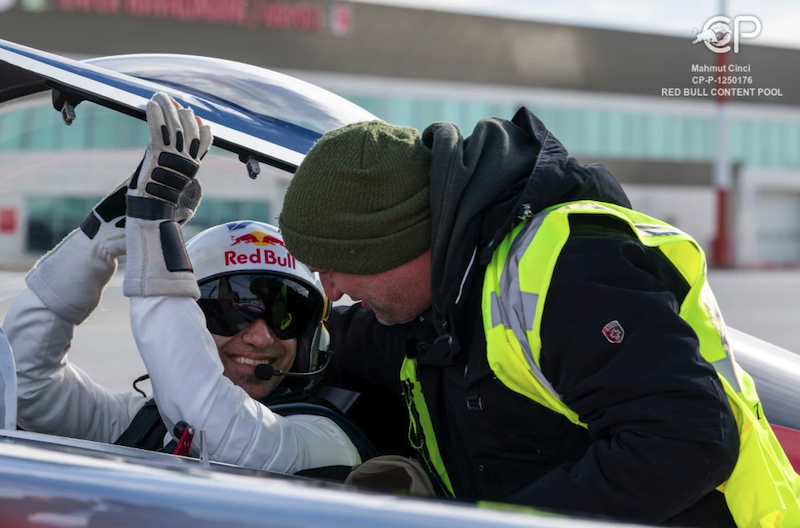
Costa said: “Train Landing was one of the most challenging and demanding projects of my career. There were so many variables to measure, but the greatest test was learning to land blind on a very small moving runway – relying only on cognitive and flying skills.
Despite the difficulty, it was a great experience. For the first time, an aircraft successfully interacted with a moving train, bringing together the oldest motorised transportation with the newest. It was a complex project that required precision, teamwork, and trust – and I’m proud we executed it as planned.”
Preparation for the attempt included months of aerodynamic analysis, simulation work and specialized “time–movement–anticipation” training at the Red Bull Athlete Performance Centre in Austria.
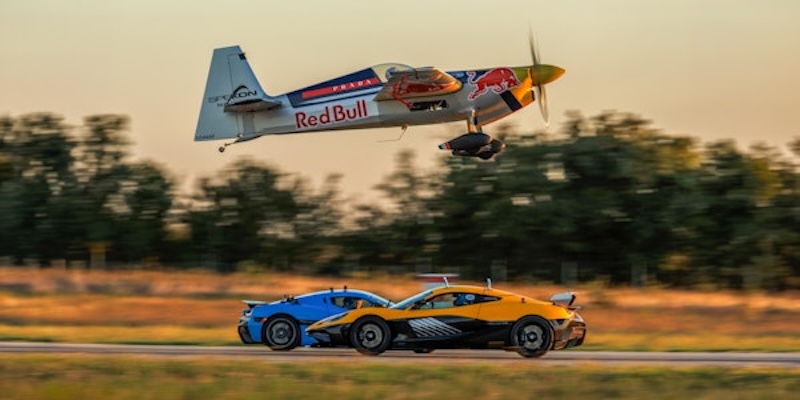
Croatian hypercar manufacturer Rimac also played a role in the preparation phase. During a three-day test program at Pula Airport, Costa used Rimac’s Nevera and Nevera R hypercars as high-precision moving reference platforms to rehearse speed matching and alignment on a moving target. Rimac engineers additionally developed a custom-fitted cockpit seat and contributed aerodynamic expertise.
Mate (pronounced Ma-tay) Rimac, whose family name is on the cars, said: “This project is the perfect expression of what Rimac stands for. Dario needed to train something that had never been done before, which meant there was no established method and no existing solution.
“Our hypercars gave him a real, moving, high-speed reference point; something only a handful of vehicles on the planet could provide at that precision and speed. When you are pushing into completely unknown territory, you need tools that match your ambition. We were proud to be part of that.”
Costa, who previously flew through two highway tunnels in Istanbul in 2021, now adds the moving-train landing to a career that includes more than 20 aviation world-firsts and five Guinness World Records.
